

• Kontrast
      • Animacje: Wyłącz
      • Kontrast: A Domyślna wersja kolorystyczna A Czarny tekst na białym tle A Biały tekst na czarnym tle A Czarny tekst na żółtym tle A Żółty tekst na czarnym tle
      • Powiększ tekst: Ctrl plus
      • Pomniejsz tekst: Ctrl minus
      • Przywróć: Ctrl zero
  • Wybierz język polski PL
  • Boutique
  • Newsletter
  • VOD
Teatr Wielki - Opera Narodowa Teatr Wielki - Opera Narodowa
  • Strona główna
  • What's on
    • Calendar
    • The 2025/26 Season
    • Exhibitions 2025/26
    • VOD
  • Tickets
    • Buy tickets
    • Information for visitors
    • Ticket refunds
  • About
    • News
    • Polish National Ballet
    • People
    • Place
    • Backstage
    • History
    • Contact Us
  • Our projects
    • Education
    • Opera Gallery
    • Opera Academy
    • Moniuszko Vocal Competition
    • Theatre Museum
    • Volunteering
    • For the Media
    • Venue hire
    • EU funding

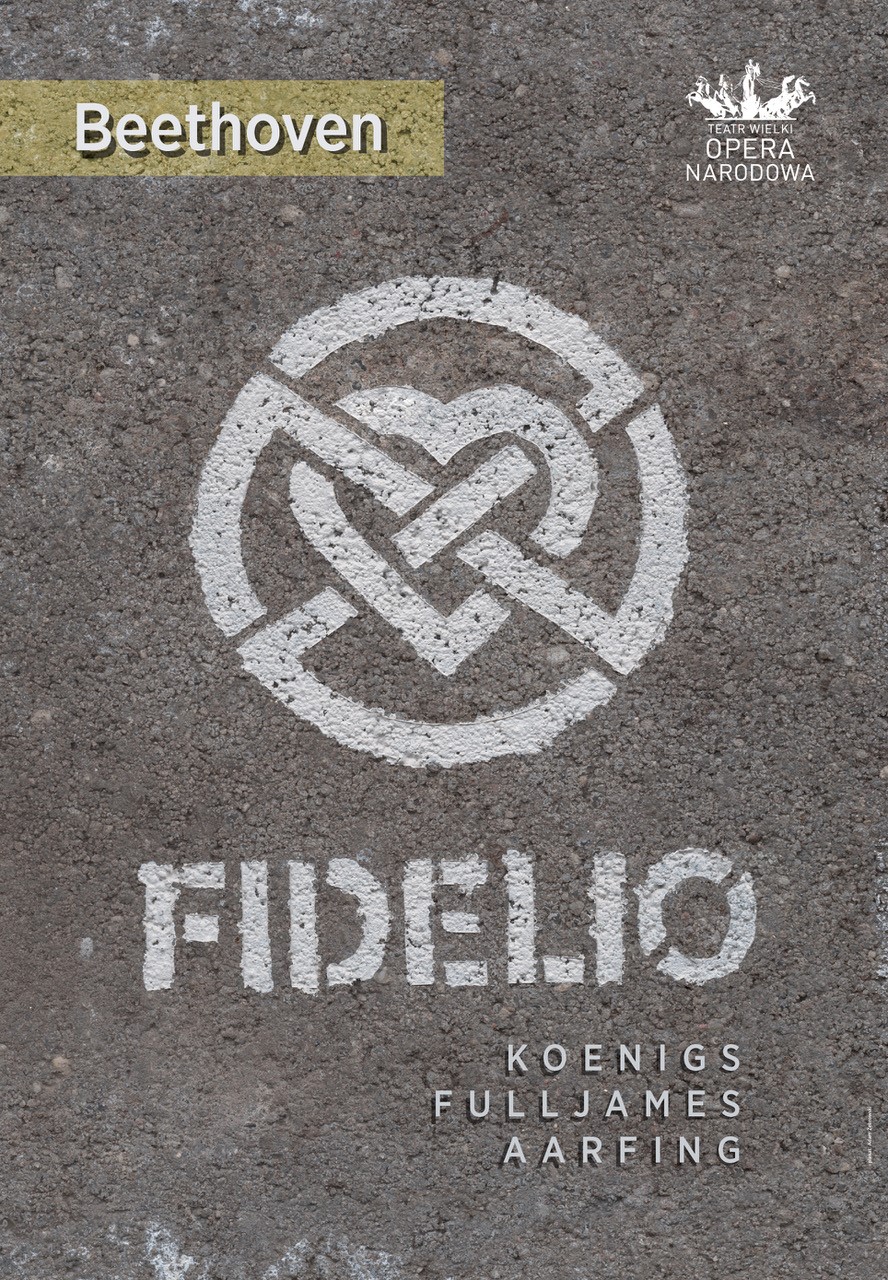
Fidelio

Ludwig van Beethoven

  • Act I

    1 h 15 min.

  • Intermission

    25 min.

  • Act II

    50 min.

  • Act I & II

    1 h 30 min

  • Intermission

    ca. 25 min

  • Act III

    40 min

  • Intermission

    ca. 25 min

  • Act IV

    1 h

Duration: ca. 3 hrs

  • See photo: projekt Adam Żebrowski projekt Adam Żebrowski
  • See photo: Fot. Krzysztof Bieliński Fot. Krzysztof Bieliński
  • See photo: Fot. Krzysztof Bieliński Fot. Krzysztof Bieliński
  • See photo: Fot. Krzysztof Bieliński Fot. Krzysztof Bieliński
  • See photo: Fot. Krzysztof Bieliński Fot. Krzysztof Bieliński
  • See photo: Fot. Krzysztof Bieliński Fot. Krzysztof Bieliński
  • See photo: Fot. Krzysztof Bieliński Fot. Krzysztof Bieliński
  • See photo: Fot. Krzysztof Bieliński Fot. Krzysztof Bieliński
  • See photo: Fot. Krzysztof Bieliński Fot. Krzysztof Bieliński
  • 24 October 2021 Sunday 18:00 Moniuszko Auditorium
  • 27 October 2021 Wednesday 19:00 Moniuszko Auditorium
  • 29 October 2021 Friday 19:00 Moniuszko Auditorium
  • 31 October 2021 Sunday 18:00 Moniuszko Auditorium
Performances
  • Duration
  • Images
  • Videos
  • Time is measured by

Cast

2021-10-24 | 18:00
    • Daniel Sutin

      Don Fernando
    • Krzysztof Szumański

      Don Pizarro
    • Torsten Kerl

      Florestan
    • Ann Petersen

      Leonora
    • Krzysztof Borysiewicz

      Rocco
    • Maria Stasiak

      Marcelina
    • Emil Ławecki

      Jaquino
    • Anna Terlecka

      Lidia Kitlińska

      First prisoner
    • Mirosław Gotfryd

      Jacek Kostoń

      Second prisoner
    • Daniel Sutin

      Don Fernando
    • Krzysztof Szumański

      Don Pizarro
    • Torsten Kerl

      Florestan
    • Ann Petersen

      Leonora
    • Krzysztof Borysiewicz

      Rocco
    • Maria Stasiak

      Marcelina
    • Emil Ławecki

      Jaquino
    • Anna Terlecka

      Lidia Kitlińska

      First prisoner
    • Mirosław Gotfryd

      Jacek Kostoń

      Second prisoner
    • Daniel Sutin

      Don Fernando
    • Krzysztof Szumański

      Don Pizarro
    • Torsten Kerl

      Florestan
    • Ann Petersen

      Leonora
    • Krzysztof Borysiewicz

      Rocco
    • Maria Stasiak

      Marcelina
    • Emil Ławecki

      Jaquino
    • Anna Terlecka

      Lidia Kitlińska

      First prisoner
    • Mirosław Gotfryd

      Jacek Kostoń

      Second prisoner
    • Daniel Sutin

      Don Fernando
    • Krzysztof Szumański

      Don Pizarro
    • Torsten Kerl

      Florestan
    • Ann Petersen

      Leonora
    • Krzysztof Borysiewicz

      Rocco
    • Maria Stasiak

      Marcelina
    • Emil Ławecki

      Jaquino
    • Anna Terlecka

      Lidia Kitlińska

      First prisoner
    • Mirosław Gotfryd

      Jacek Kostoń

      Second prisoner

Credits

    • John Fulljames

      Director
    • Steffen Aarfing

      Set and Costume Designer, Video projections
    • Lee Curran

      Lighting Designer
    • Mirosław Janowski

      Chorus Master
    • Lothar Koenigs

      Conductor
    • Aylin Seda Bozok

      Associate Director
    • John Fulljames

      Director
    • Steffen Aarfing

      Set and Costume Designer, Video projections
    • Lee Curran

      Lighting Designer
    • Mirosław Janowski

      Chorus Master
    • Lothar Koenigs

      Conductor
    • Aylin Seda Bozok

      Associate Director
    • John Fulljames

      Director
    • Steffen Aarfing

      Set and Costume Designer, Video projections
    • Lee Curran

      Lighting Designer
    • Mirosław Janowski

      Chorus Master
    • Lothar Koenigs

      Conductor
    • Aylin Seda Bozok

      Associate Director
    • John Fulljames

      Director
    • Steffen Aarfing

      Set and Costume Designer, Video projections
    • Lee Curran

      Lighting Designer
    • Mirosław Janowski

      Chorus Master
    • Lothar Koenigs

      Conductor
    • Aylin Seda Bozok

      Associate Director

Opera in two acts
Libretto: Joseph Sonnleithner, Stephan von Breuning, Georg Friedrich Treitschke
World premiere: 20 November 1805, Theater an der Wien (initial version), 23 May 1814, Karntnertor Theater (final version)
Polish premiere of this production: 23 June 2021, Polish National Opera, Teatr Wielki, Warsaw
A co-production with: Royal Danish Theatre, Copenhagen; Nederlandse Reisopera, Enschede
In the original German with Polish surtitles

Zapraszamy na spotkanie przed operą Fidelio Ruch w Wielkim 23 października o godz. 18.30 w Butiku w lewym skrzydle teatru. Gośćmi spotkania będą: John Fulljames, Torsten Kerl oraz Steffen Aarfing. Prowadzenie: Dominika Micał i Maciej Kucharski

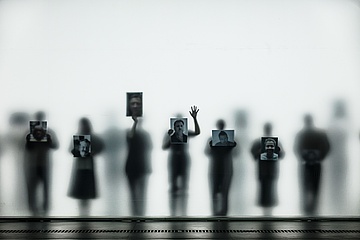
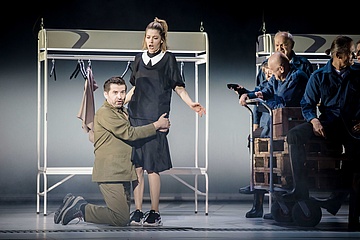
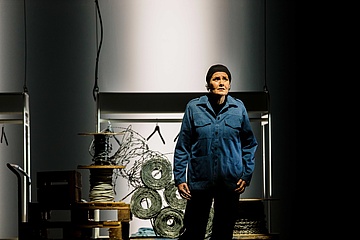
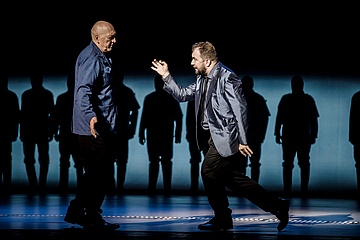
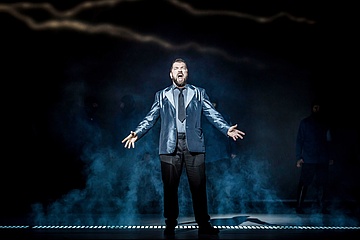
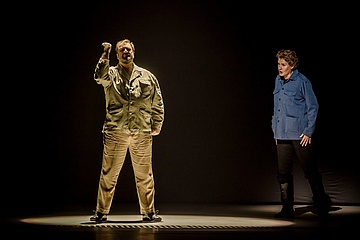
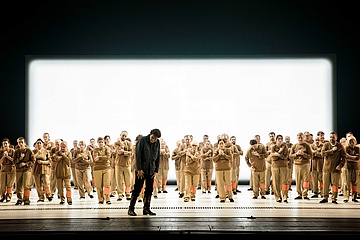
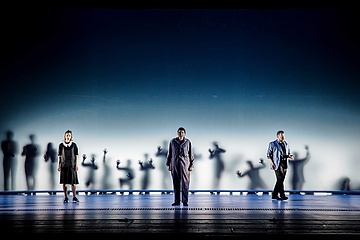
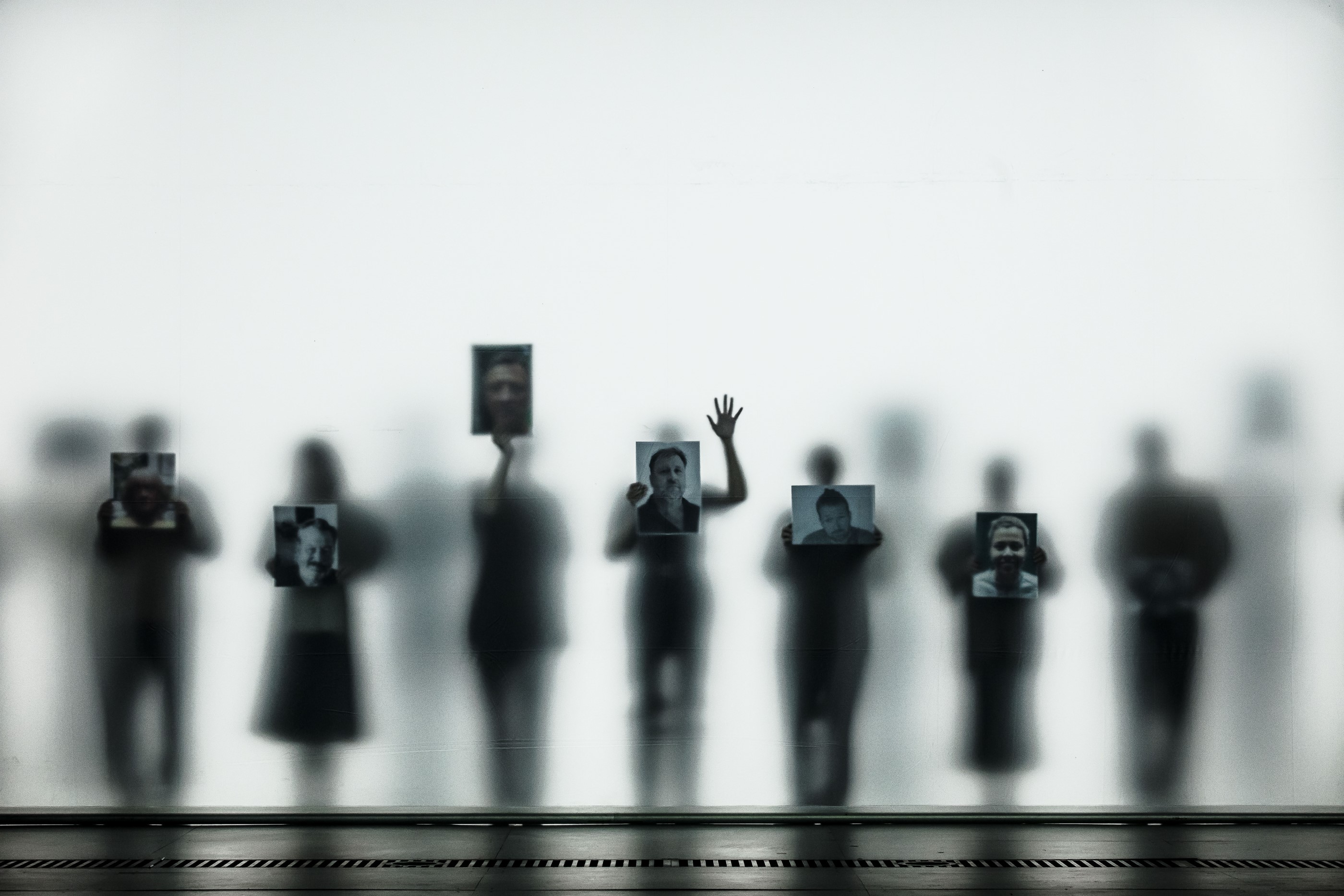
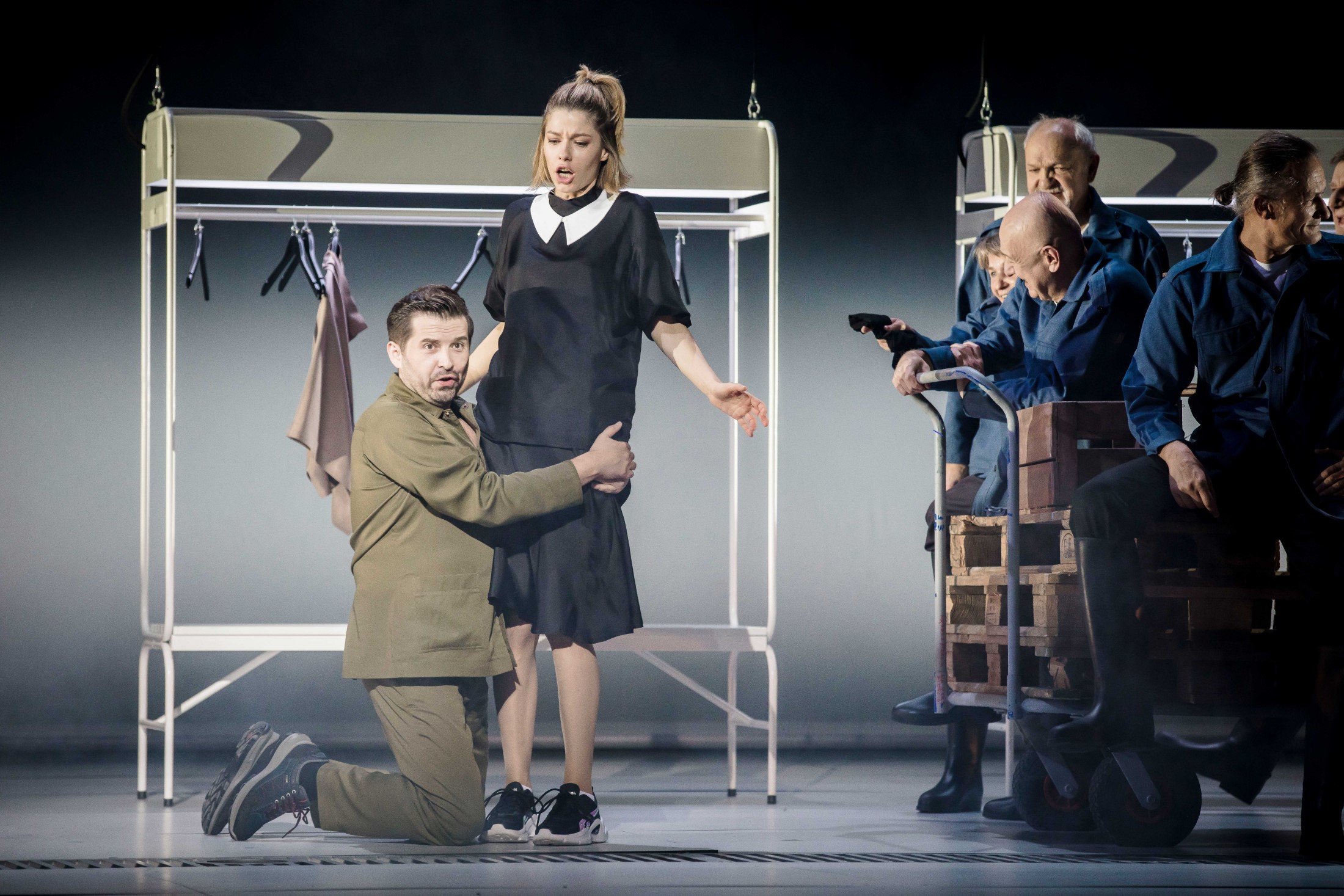
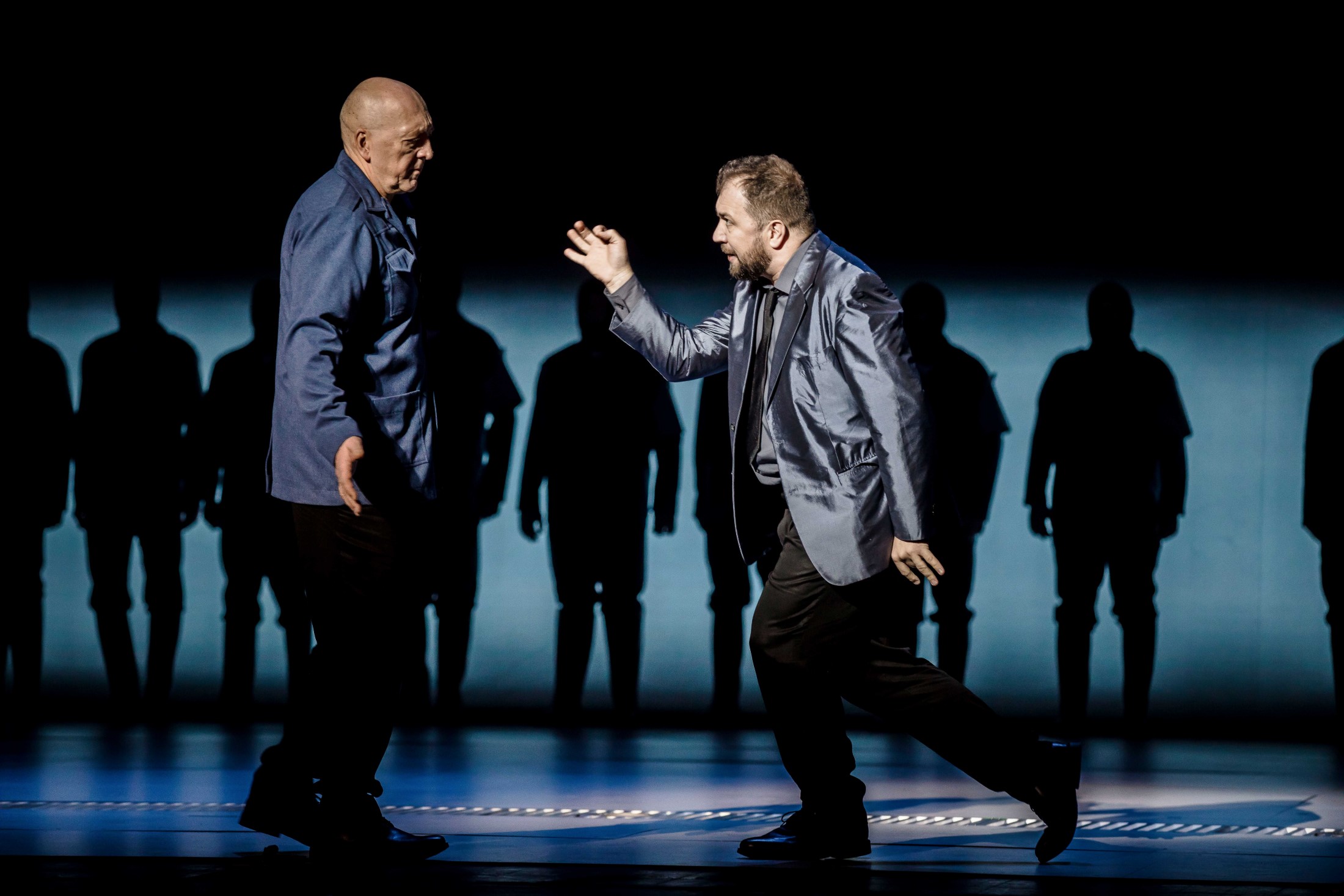
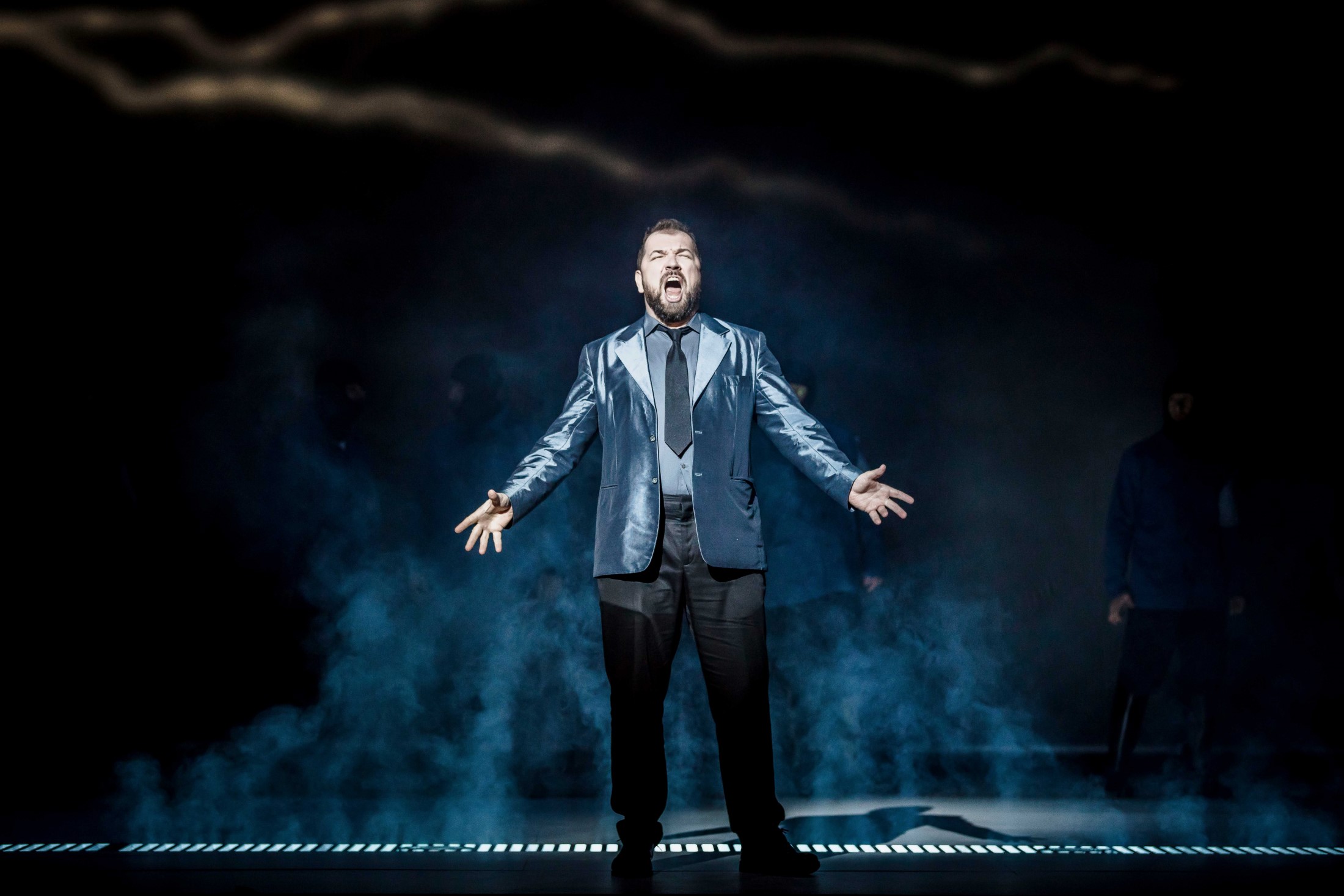
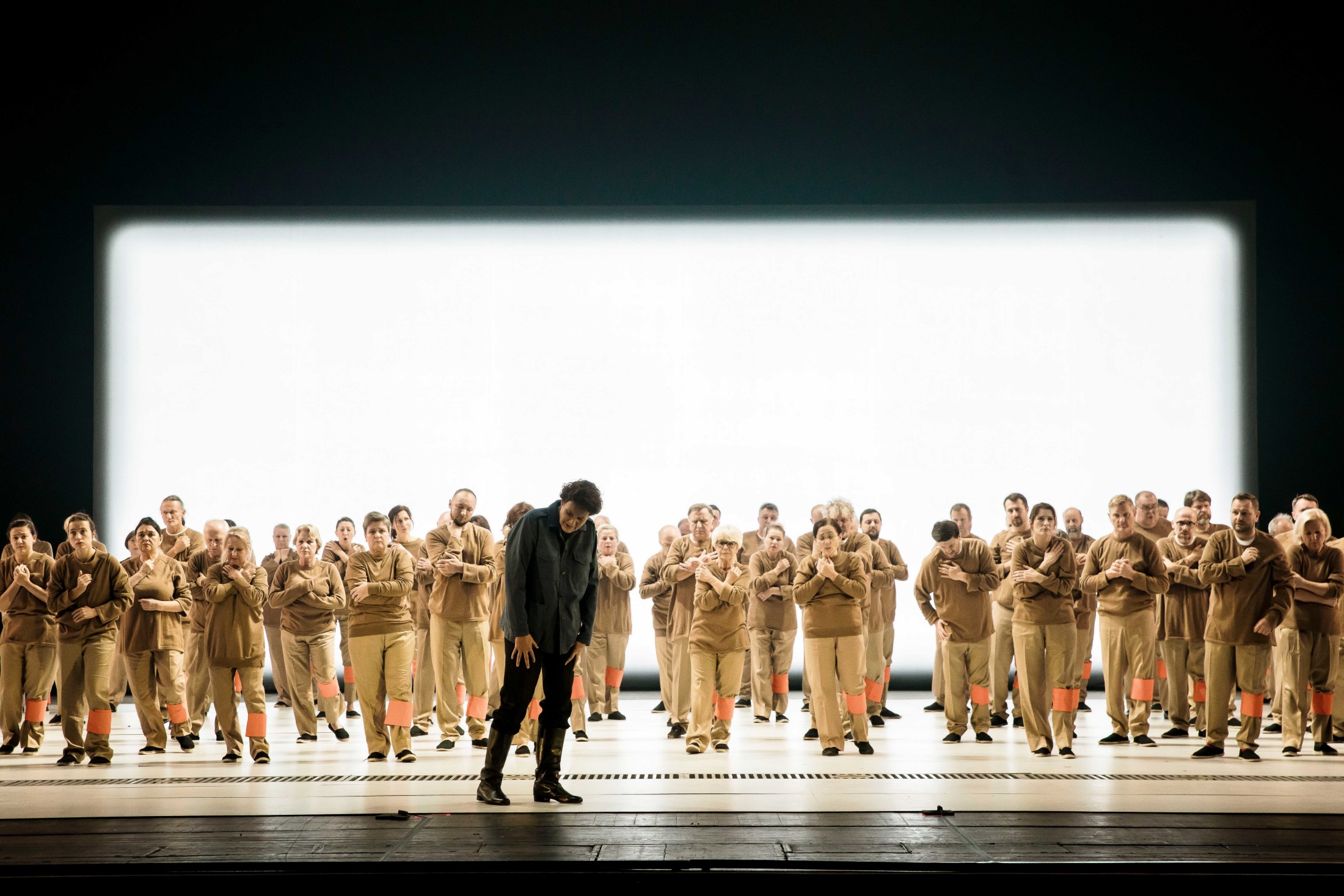
Amid revolutionary feeling joyfully manifested by the chorus, Florestan, a man sentenced to death, is freed from prison by his wife, Leonora, who gained admission into the carefully guarded dungeon using subterfuge. Love brings salvation, the tyrant Pizarro is toppled. Fidelio is a timeless hymn to freedom. Beethoven agues that there is no moral or economic value that trumps freedom itself. This is the sense and the essence of the composer’s only opera according to English stage director and Artistic Director of the Royal Danish Opera, John Fulljames, whose production of the piece, created in collaboration with the opera house in Copenhagen and the Nederlandse Reisopera, will be shown in Warsaw. Drawing on this thought, set designer Steffen Aarfing shows that in a country controlled by a despot everyone is a prisoner – the mighty powers-that-be erect walls of inhuman proportions turning ordinary people into fragile figurines.

Beethoven believed in the fall of monarchic tyrannies. He looked with hope in the direction of France, where in his young days a great revolution had broken out heralding the end of political subjugation. He also admired the heroic French leader Napoleon Bonaparte until the latter had not crowned himself the emperor of the French. The composer detested one-man rule and censorship – he was a democrat through-an-through, the first liberated artist in the history of music, whose life motto was to get as much money as possible from his aristocratic admirers, but never bend to them. 

Preparing to write an opera, he went through dozens of libretto materials, but only one play caught his fancy: Leonor, or marital love by Jean-Nicolas Bouilly, in which justice triumphs over despotism and fidelity overcomes all obstacles. As music theoretician Theodor W. Adorno wrote: Rather than portraying the act of revolution in this work, Beethoven recreates it on stage like the Holy Mass.

Ironically, the author of Fidelio never experienced the marital love he celebrated so much. To boot, his freedom-themed opera premiered in Vienna in 1805 after the city had been conquered by Bonaparte, whose sole motivation at that time was to expand his empire. In Fidelio the hope for a divine intervention is fulfilled. After the French Revolution, a new opera genre emerged, known as rescue opera or Schrecken und Rettungsoper in German, of which Fidelio is an example. ‘There is a Providence over all,’ Leonore tells her husband before he recognises her in a man’s disguise. In the opera’s finale, a ‘minister’ strips Pizarro of his power, which he abused filling state prisons to the brim. An unexpected rescue has come. One may ask: What is the deus ex machina in our day and age? In the 21st century we find ourselves unable to share Beethoven’s certainty that wrongdoers will be punished and tyrants toppled one and for all. We know that those in power will not hesitate to abuse it and shall not give it up for sure. 

Chorus and Orchestra of the Polish National Opera

Synopsis

  • Act I and II


    We are in a valley along which pilgrims are travelling. The sun does not

    shine here, and God is far, far away. The travellers are people of all races,

    classes and nationalities, adults and children, living and dead.

    They are on their way to the devilish nymph Goplana to ask her for a

    moment's relief from their purgatorial suffering. The demonic queen of Lake

    Gopło emerges from the water's surface and tells her servants Skierka and

    Chochlik about how she fell in love with a village boy who tumbled into her

    lake the previous winter. She wanted to keep him at her side. She knew the boy

    would die if he stayed underwater. When she saw a hand coming from above to

    rescue him, she let him go. Listening to their mistress's story, Skierka and

    Chochlik realize she is talking about Grabiec, a stable boy who is

    clandestinely meeting with Balladyna, the daughter of an impoverished

    gentlewoman.

    Grabiec appears in his boat. He sings of the appeal of a simple rural

    life and his love for Balladyna. Intoxicated by his presence, Goplana offers

    him anything he might desire if only he will stay with her. Grabiec turns her

    down, not mincing his words. He finds the devilish nymph repulsive. He flees.

    Chochlik promises to get rid of Balladyna and win Grabiec for his mistress.

    Meanwhile, Prince Kirkor rides by the lake on his way back from war with

    his friend and servant Kostryn the knight and other soldiers. He is tormented

    by melancholy and anxiety. He sees a swallow and follows it, singing a song

    about his longing for pure love. The bird leads him to the Widow and her two

    daughters. One of them is Balladyna, a dark-haired beauty and Grabiec's

    beloved. The girl makes a huge impression not only on Kirkor but mainly on

    Kostryn, who immediately recognizes her as a dark kindred spirit. The other one

    is Alina. The prince cannot stop marvelling at the sisters' noble beauty,

    Balladyna's devotion and Alina's artlessness. He is unable to choose between

    them. Chochlik whispers to the Widow to have her daughters take jugs in the

    morning and go raspberry picking. The one who first brings a hundred

    raspberries will be Kirkor's wife. The Widow suggests this strange idea to the

    prince. Alina, watched by Chochlik, prays for success in the following day's

    undertaking.

    Balladyna slips away to meet Grabiec. They both fall asleep in his boat

    in the middle of the lake. Skierka and Chochlik rouse the boy from his sleep

    and lead him to their mistress. Rejected once again, Goplana turns Grabiec into

    a willow.

    Balladyna is awoken by Alina, who is holding a jug filled with

    raspberries. Balladyna is angry with herself, especially since her sister brags

    about her victory. She reaches for a knife and kills Alina. When she returns

    home she lies to her mother that Alina has eloped with a lover from the

    village. A mark the colour of berries and blood appears on Balladyna's

    forehead. Kirkor takes her to his castle.

  • Act III


    Balladyna is alone in the castle. Kirkor has gone away, leaving the

    estate and his wife in Kostryn's care. The woman analyses what has happened and

    decides there is no turning back, she has to "follow destiny's path".

    Kostryn enters. Balladyna sounds out his soul and opens up to him,

    allowing him to show his feelings. A procession of guests is approaching the

    castle. The princess asks Kostryn to help her receive them at a banquet. She is

    left alone, but her mother soon appears to tell her a dream in which she had a

    visit from Alina in a bloodstained white dress. Seeing Balladyna's reaction and

    her unwillingness to show her mother the mysterious stain on her forehead, the

    Widow realizes that her daughters were in a sororicidal fight.

    Grabiec appears at the banquet. He is changed, accompanied by a strange

    retinue that also includes Skierka and Chochlik. Balladyna does not recognize

    her former lover in the prince from a distant land. Grabiec sings, revealing

    his identity to the princess and telling her that as a willow he witnessed her

    crime. Terrified, Balladyna orders Kostryn to poison the guest. The knight proposes

    a toast in the honour of Grabiec, who drinks from the poisoned cup and dies.

    Kirkor enters. The situation he sees rouses his anger. Balladyna accuses

    Kostryn of having violated her virtue and poisoned the guest.

    The Widow arrives, exposing her daughter to the prince as a murderess

    and pointing to the band on Balladyna's forehead as proof of the crime.

    Everyone demands that the princess take off the tiara concealing the mark. As

    Balladyna uncovers her forehead, she is hit by a bolt of lightning sent down by

    the angry Goplana. The girl dies.

    Krzysztof Knurek

  • Act III

    The temple

    In the shadow of the Great Buddha, a bronze idol dances as the High Brahmin and the priests prepare for the wedding of Gamzatti and Solor. The betrothed couple enter, and the bayadères perform a ritual candle dance round them, reminiscent of the Sacred Fire burning outside the temple. The Rajah, Gamzatti and Solor dance, but Solor is haunted by the vision of Nikiya, which is visible only to him. During the dance, a basket of flowers identical to the one given to Nikiya mysteriously appears, and Gamzatti, terrified and consumed with guilt, urges her father to complete the wedding ceremony. The High Brahmin performs the ceremony on the steps of the altar, but Solor cannot force himself to say the vows. The infuriated gods destroy the temple and bury everyone under its ruins. The spirits of Nikiya and Solor are reunited in eternal love.

Sponsors

  • - Ministerstwo Kultury i Dziedzictwa Narodowego
  • Partnerzy Akademii Operowej

  • - PZU
  • Partnerzy Teatru Wielkiego - Opery Narodowej

  • Partner technologiczny

  • Paged Meble
  • Patroni medialni

  • - Polskie Radio Program 2
  • Presto
  • Ministry of Culture and National Heritage of the Republic of Poland
  • Partners of the Opera Academy

  • - PZU
  • Partners of Teatr Wielki – Polish National Opera

  • Technological partner

  • Paged
  • Media patrons

  • - Polskie Radio Program 2
  • Presto
  • Strona główna
  • Udostępnij
do góry
  • What's on

    • 2024/2025 season overview
    • Calendar of events

    Tickets

    • Buy a ticket
    • 2024/25 Terms and Conditions
    • Terms and conditions of a time-limited offer on 10 June 2025
  • About

    • News
    • Polish National Ballet
    • The People
    • The Place
    • History
    • Backstage
    • VOD
    • For the media
    • Contact us
  • Our projects

    • Education
    • Opera Academy
    • Moniuszko Competition
  • Practical info

    • Your visit
    • Accessibility
    • Sitemap
    • Newsletter
  • For partners and sponsors

    • Our partners and sponsors
    • Support us
    • Venue hire
    • Public procurement
    • Job offers
Logo Instagram

Teatr Wielki - Polish National Opera, plac Teatralny 1, 00-950 Warszawa, skrytka pocztowa 59

Reservations: +48 22 692 02 08 Operator: +48 22 692 02 00 E-mail: office@teatrwielki.pl

Europejski Fundusz Rozwoju Regionalne
''