





Boris Godunov
Modest Mussorgsky
Opera in four acts and a prologue
Libretto and music: Modest Mussorgsky based on Alexander Pushkin
World premiere: 8 February 1874, Mariinsky Theatre, St Petersburg
A co-production with: New National Theatre, Tokyo (NNTT)
After thirteen years, Mariusz Treliński reprises Modest Mussorgsky’s Boris Godunov, an operatic historical fresco and psychological drama exposing the mechanism of seizing and consolidating power by violence and stealth. Developed in 2008, the director’s first take on the opera was originally staged at the Lithuanian National Opera and Ballet Theatre in Vilnius. It opened in Warsaw a year later. The press described the production as 'a raw, yet suggestive tale of a ruler killed by remorse' (Ruch Muzyczny) and 'a story about a tsar’s rise to power and his demise' (Gazeta Wyborcza).
Boris Godunov is a brilliant music adaptation of Alexander Pushkin’s Shakespearian tragedy under the same title and describing one of the most tragic periods in Russian history, called Smuta. In the early 17th century, the throne was claimed by a succession of usurpers posing as Dimitry, the son of the last tsar of the Rurik dynasty. Dimitry was murdered by Boris Godunov, a powerful boyar who himself acceded to the throne only to be murdered by False Dimitry I. History was not kind to the the imposter either, and he was succeeded on the throne by three other usurpers. Only the emergence of Michael Romanov ended the period time of chaos and lawlessness, and begin a new dynasty. It did not, however, end tsarist autocracy. To the contrary, the Romanovs ruled the country with a rod of iron.
Modest Mussorgsky worked on the opera in a state of inspiration, drawing on Nikolay Karamzin’s history of Russia. 'I lived Boris and in Boris, and the time [...] has left permanent, cherished marks in my mind,’ he wrote in a litter to a friend. He completed the first version of the opera in 1869 and submitted the opera to the tsarist Mariinsky Theatre in St Petersburg, yet it was rejected. One of the reasons cited was the lack of a significant female role as the original version of the score did not feature Act 3 with the polonaise, nor the character of Marina Mniszech obsessed with marrying a tsar. In 1872 Mussorgsky devised a revised version and called the piece 'people’s musical drama in four acts with a prologue based on Pushkin and Karamzin', with the qualifier pointing to the important role played by the collective in the opera: meek and submissive towards a God-appointed monarch, the Russian people are shown as cruel and bloodthirsty when it comes to the imposter. Still, the second version of the work was not approved by the Mariinsky’s decision-makers either and would have surely fallen into oblivion if it had not been for the theatre’s first soloist Yuliya Feodorovna Platonova who threatened the tsarist officials with her resignation should they not stage the work. This way, she also secured the role of Marina Mniszech in the opera’s opening performance, which took place on 8 February 1874 in St Petersburg.
-
Time is measured by
-
 <iframe width="186" height="186" border="0" src="http://test.horsefield.pl/hf/zegar/" allowfullscreen frameborder="0"></iframe><script> window.onload = function() { scaleClock(); }; window.onresize = function() { scaleClock(); }; scaleClock = function() { parentWidth = $('#arclockDiv').width(); scale = (parentWidth) / $('#arclock').width(); new_width = $('#arclock').width() * scale; $('#arclock').css('transform', ' scale(' + scale + ')'); $('#arclock').css('left', 'calc(186px * ' + (scale - 1) / 2 + ')'); $('#arclock').css('top', 'calc(186px * ' + (scale - 1) / 2 + ')'); } </script>
Credits
-
- Director
- Set Designer
- Conductor
- Costumes
- Video Projections
- Make up
-
- Lighting Designer
- Choreography
- Dramaturgy
- Chorus Master
- Casting Director
- Children's Choir Master
 Mariusz Treliński
  Boris Kudlička
 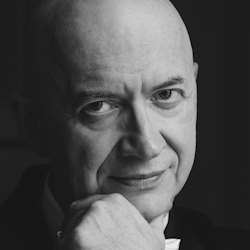 Michał Klauza
  Wojciech Dziedzic
  Bartek Macias
  Waldemar Pokromski
  Marc Heinz
  Maćko Prusak
  Marcin Cecko
 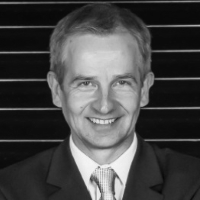 Mirosław Janowski
 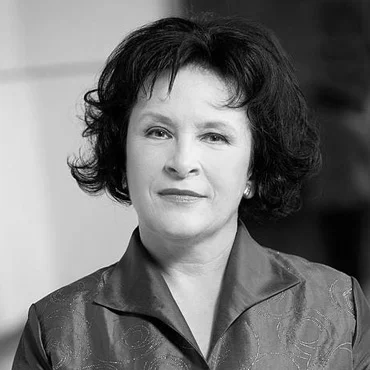 Izabela Kłosińska
 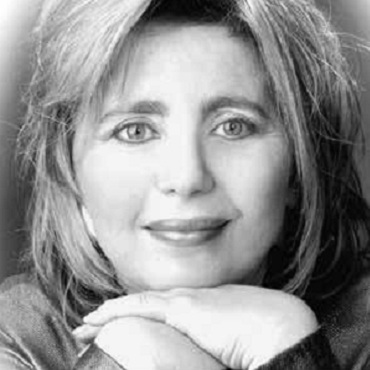 Danuta Chmurska
 -
- Director
- Set Designer
- Conductor
- Costumes
- Video Projections
- Make up
-
- Lighting Designer
- Choreography
- Dramaturgy
- Chorus Master
- Casting Director
- Children's Choir Master
-
- Director
- Set Designer
- Conductor
- Costumes
- Video Projections
- Make up
-
- Lighting Designer
- Choreography
- Dramaturgy
- Chorus Master
- Casting Director
- Children's Choir Master
-
- Director
- Set Designer
- Conductor
- Costumes
- Video Projections
- Make up
-
- Lighting Designer
- Choreography
- Dramaturgy
- Chorus Master
- Casting Director
- Children's Choir Master
Chorus and Orchestra of the Polish National Opera
Sponsors
-

-
Partnerzy Akademii Operowej
-

-
Partnerzy Teatru Wielkiego - Opery Narodowej
-
Partner technologiczny
-

-
Patroni medialni
-

-

-
-
Partner of the premiere
-

-
Partners of the Opera Academy
-
-
Partners of Teatr Wielki – Polish National Opera
-
Technological partner
-

-
Media patrons
-
-
-
Partner of the event
-

-
Partners of the reception
-

-

-

-

 ''
''