• Kontrast
      • Animacje: Wyłącz
      • Kontrast: A Domyślna wersja kolorystyczna A Czarny tekst na białym tle A Biały tekst na czarnym tle A Czarny tekst na żółtym tle A Żółty tekst na czarnym tle
      • Powiększ tekst: Ctrl plus
      • Pomniejsz tekst: Ctrl minus
      • Przywróć: Ctrl zero
  • Wybierz język polski PL
  • Boutique
  • Newsletter
  • VOD
Teatr Wielki - Opera Narodowa Teatr Wielki - Opera Narodowa
  • Strona główna
  • What's on
    • Calendar
    • The 2026/27 Season
    • Exhibitions 2026/27
    • VOD
      • Tickets
        • Buy tickets
        • Information for visitors
        • Ticket refunds
        • Ticket prices in the 2026/27 season
          • About
            • News
            • Polish National Ballet
            • People
            • Place
            • Backstage
            • History
            • Contact Us
            • Our projects
              • Education
              • Opera Gallery
              • Opera Academy
              • Moniuszko Vocal Competition
              • Theatre Museum
              • Volunteering
              • For the Media
              • Venue hire
              • EU funding

            La traviata

            Giuseppe Verdi

            • Act 1

              30 min.

            • Intermission

              25 min.

            • Act 2

              40 min.

            • Intermission

              25 min.

            • Act 3 & 4

              50 min.

            Duration:  2h50 min.

            • See photo: fot. / photo by Krzysztof Bieliński fot. / photo by Krzysztof Bieliński
            • See photo: fot. / photo by Krzysztof Bieliński fot. / photo by Krzysztof Bieliński
            • See photo: fot. / photo by Krzysztof Bieliński fot. / photo by Krzysztof Bieliński
            • See photo: fot. / photo by Krzysztof Bieliński fot. / photo by Krzysztof Bieliński
            • See photo: fot. / photo by Krzysztof Bieliński fot. / photo by Krzysztof Bieliński
            • See photo: fot. / photo by Krzysztof Bieliński fot. / photo by Krzysztof Bieliński
            • See photo: fot. / photo by Krzysztof Bieliński fot. / photo by Krzysztof Bieliński
            • See photo: fot. / photo by Krzysztof Bieliński fot. / photo by Krzysztof Bieliński
            • See photo: fot. / photo by Krzysztof Bieliński fot. / photo by Krzysztof Bieliński
            • See photo: fot. / photo by Krzysztof Bieliński fot. / photo by Krzysztof Bieliński
            • See photo: fot. / photo by Krzysztof Bieliński fot. / photo by Krzysztof Bieliński
            • See photo: fot. / photo by Krzysztof Bieliński fot. / photo by Krzysztof Bieliński
            • See photo: fot. / photo by Krzysztof Bieliński fot. / photo by Krzysztof Bieliński
            • See photo: projekt/design Adam Żebrowski projekt/design Adam Żebrowski
            • 8 May 2022 Sunday 18:00 Moniuszko Auditorium
            • 10 May 2022 Tuesday 19:00 Moniuszko Auditorium
            • 11 May 2022 Wednesday 19:00 Moniuszko Auditorium
            • 13 May 2022 Friday 19:00 Moniuszko Auditorium
            • 14 May 2022 Saturday 19:00 Moniuszko Auditorium
            • 15 May 2022 Sunday 18:00 Moniuszko Auditorium
            Performances
            • Duration
            • Images
            • Videos

            Opera in four acts 
            Libretto: Francesco Maria Piave after La Dame aux camèlias by Alexandre Dumas fils
            Polish premiere: 27 April 1856, Teatr Wielki, Warsaw
            Premiere of this production: 25 February 2010, Polish National Opera, Teatr Wielki, Warsaw
            In the original Italian with Polish surtitles

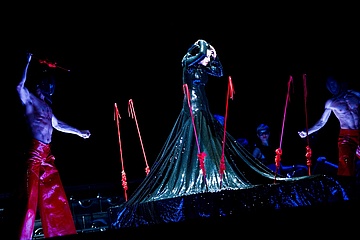
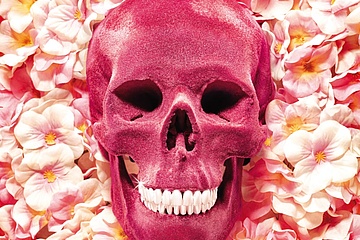
            The directorial motto of this splendid take on La traviata could be a sentence taken from the farewell note left by Curt Cobain, the leader of Nirvana: 'It’s better to burn out than to fade away'. Because Mariusz Treliński’s production of the Verdi opera is a tale of a star consumed by her own luminosity. He turns the operatic masterpiece into a portrayal of an artistic community.

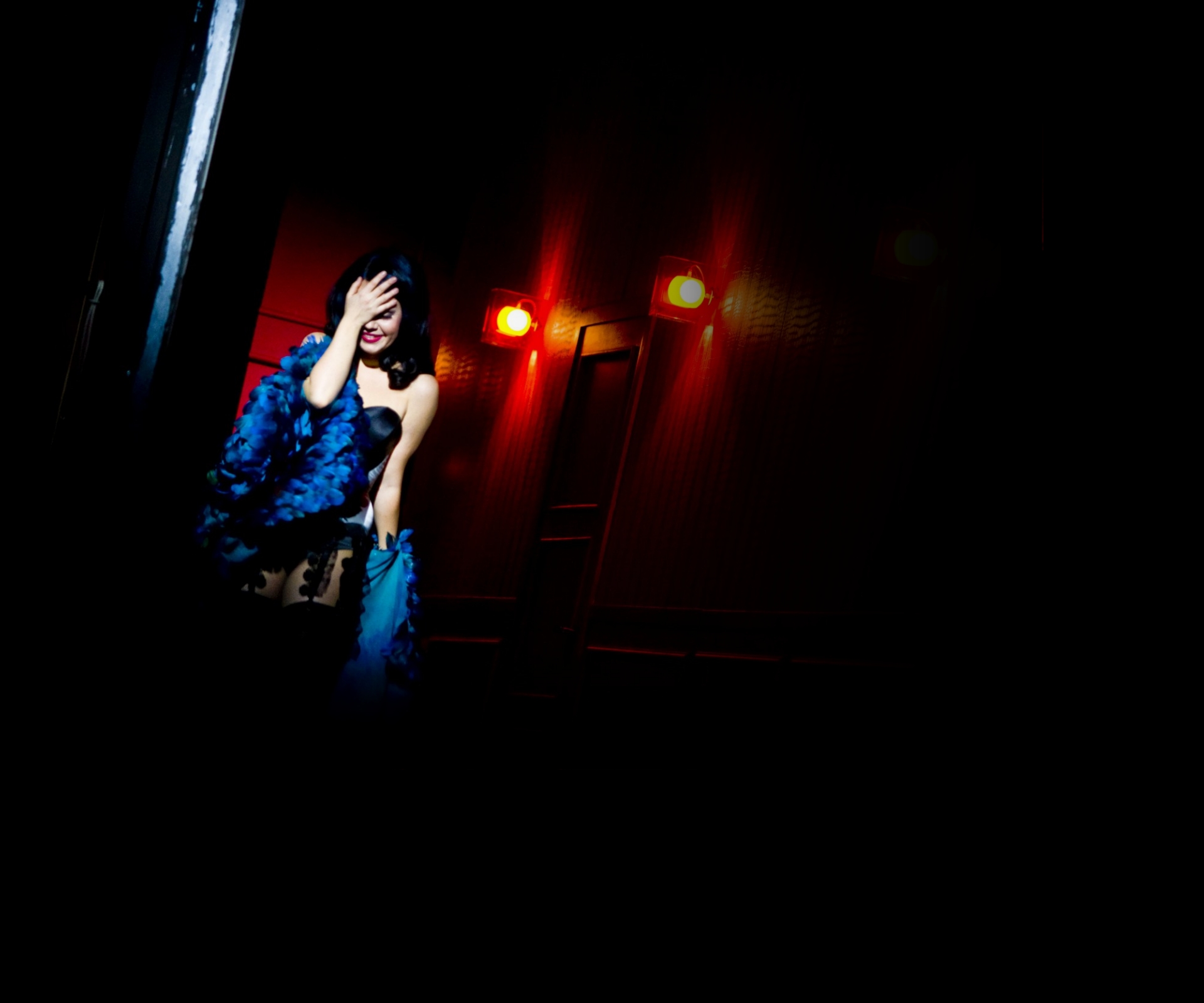
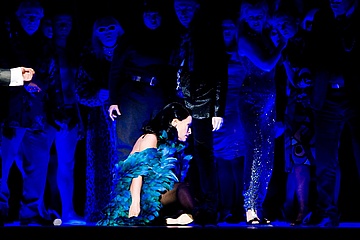
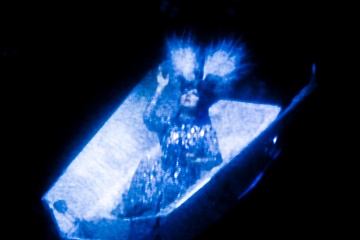
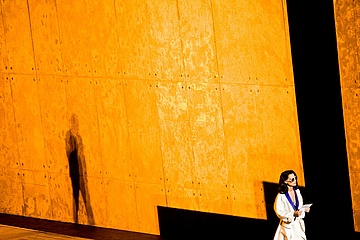
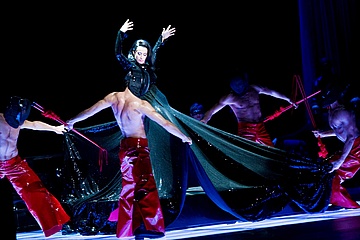
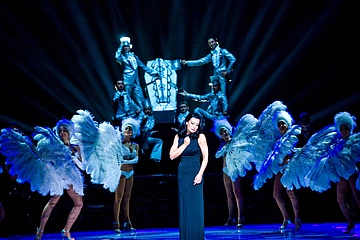
            Violetta Valery – sung by Aleksandra Kurzak on the opening night – is a widely adored revue artist. Her stage costume comprises a pitch black wig, corset, blue feather boa/coat, and stockings held up by garters. She does not lead the life of a luxurious courtesan as her literary model in The Lady of the Camellias by Alexandre Dumas fils, yet she does live off her physical attractiveness and devotion of her fandom.  

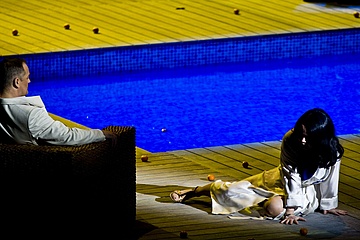
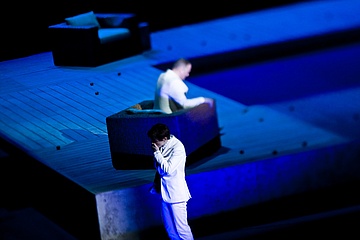
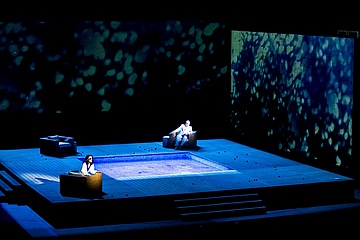
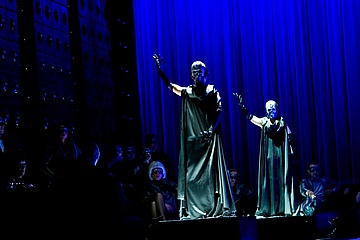
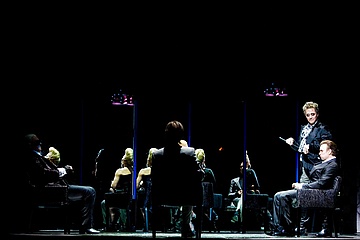
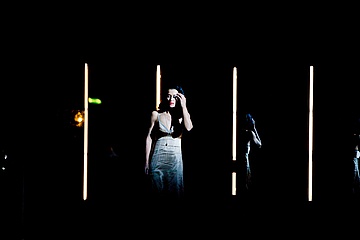
            Designed by Boris Kudlička, the set is positioned on a 50-meter high platform and keeps moving from the left wing to the right to the rhythm of the music, revealing scenes from the heroine’s life: a cabaret venue full of dance and colourful lights, wild parties in the company of her friends headlined by Alfredo Germont, who is deeply besotted with the beautiful celebrity. His love will cause an internal transformation of Violetta and the colourful 'movie' about her glamorous existence will morph into a story of spiritual growth. The evolution is accompanied by disappearing scenery: while Act 1 takes place in a dance-filled Parisian club, the final scenes unfold on a bare stage, where the heroine meets her death.   

            In the 19th century the profession of courtesan stirred unwholesome emotions and bottled up desires, with the reactions’ intensity being proportionate to the perceived gravity of the sin and transgression of social rules. First Dumas and then Verdi both tried to divulge the hypocrisy of the bourgeoisie, who officially condemned women living off prostitution and eagerly availed of their services behind closed doors. Their masterpieces, which can easily be classed as tear-jerkers, humanised the sinner.

            Let us set the record straight on one point, though. The widely believed story of a great scandal created by the Dumas play is untrue: during the work’s 1852 Parisian world premiere the whole audience shed trees of sympathy for the poor heroine whom first quit her profession and then died of tuberculosis in the arms of her beloved before their eyes.

            Also, the failed opening of Verdi’s La traviata at La Fenice in Venice in 1853 was not down to the general outrage but inappropriate casting, in particular assigning the title role to Fanny Salvini-Donatelli, whom the crowd thought was not appealing enough. A year later, after minor revisions to the score, La traviata was put on at San Benedetto, another Venetian theatre. The triumph it scored that night lasts to this day as the title is one of the most popular operas staged across the globe.   

            A work’s greatness is measured by its contemporary relevance. What is it that attracts 21st-century audiences to La traviata , apart from the ravishing music? The social conventions have changed, the sin has lost its gravity, the old prejudices are gone. Still, La traviata is a mirror that reflects our world, where life goes on simultaneously in the material and virtual dimension, where we 'sell' our life in social media, and make our choices conditional on retailer-guided 'advice' offered by influencers. Today’s Violetta Valery could be a man or a person without a gender. The idea of breaking free from the surrounding razzmatazz and searching for meaning in life is as relevant as ever, and so are decadent attempts to escape death.

            Cast

            2022-05-08 | 18:00
              • Iwona Sobotka

                Violetta Valéry
              • Rafał Bartmiński

                Alfredo Germont
              • Krzysztof Szumański

                Giorgio Germont
              • Elżbieta Wróblewska

                Flora Bervoix
              • Katarzyna Szymkowiak

                Annina
              • Mateusz Zajdel

                Gaston de Letorieres
              • Tomasz Rak

                Baron Douphol
              • Paweł Trojak

                Marquis d’Obigny
              • Remigiusz Łukomski

                Doctor Grenvil
              • Łukasz Wroński

                Giuseppe
              • Mirosław Gotfryd

                Messenger
              • Ruslana Koval

                Violetta Valéry
              • Tadeusz Szlenkier

                Alfredo Germont
              • Stanislav Kuflyuk

                Giorgio Germont
              • Elżbieta Wróblewska

                Flora Bervoix
              • Katarzyna Szymkowiak

                Annina
              • Mateusz Zajdel

                Gaston de Letorieres
              • Tomasz Rak

                Baron Douphol
              • Paweł Trojak

                Marquis d’Obigny
              • Remigiusz Łukomski

                Doctor Grenvil
              • Igor Buczyński

                Giuseppe
              • Mirosław Gotfryd

                Messenger
              • Iwona Sobotka

                Violetta Valéry
              • Rafał Bartmiński

                Alfredo Germont
              • Krzysztof Szumański

                Giorgio Germont
              • Elżbieta Wróblewska

                Flora Bervoix
              • Katarzyna Szymkowiak

                Annina
              • Mateusz Zajdel

                Gaston de Letorieres
              • Tomasz Rak

                Baron Douphol
              • Paweł Trojak

                Marquis d’Obigny
              • Remigiusz Łukomski

                Doctor Grenvil
              • Łukasz Wroński

                Giuseppe
              • Mirosław Gotfryd

                Messenger
              • Ruslana Koval

                Violetta Valéry
              • Tadeusz Szlenkier

                Alfredo Germont
              • Stanislav Kuflyuk

                Giorgio Germont
              • Elżbieta Wróblewska

                Flora Bervoix
              • Katarzyna Szymkowiak

                Annina
              • Mateusz Zajdel

                Gaston de Letorieres
              • Tomasz Rak

                Baron Douphol
              • Paweł Trojak

                Marquis d’Obigny
              • Remigiusz Łukomski

                Doctor Grenvil
              • Igor Buczyński

                Giuseppe
              • Jacek Kostoń

                Messenger
              • Iwona Sobotka

                Violetta Valéry
              • Rafał Bartmiński

                Alfredo Germont
              • Krzysztof Szumański

                Giorgio Germont
              • Elżbieta Wróblewska

                Flora Bervoix
              • Katarzyna Szymkowiak

                Annina
              • Mateusz Zajdel

                Gaston de Letorieres
              • Tomasz Rak

                Baron Douphol
              • Paweł Trojak

                Marquis d’Obigny
              • Remigiusz Łukomski

                Doctor Grenvil
              • Łukasz Wroński

                Giuseppe
              • Jacek Kostoń

                Messenger
              • Ruslana Koval

                Violetta Valéry
              • Tadeusz Szlenkier

                Alfredo Germont
              • Stanislav Kuflyuk

                Giorgio Germont
              • Elżbieta Wróblewska

                Flora Bervoix
              • Katarzyna Szymkowiak

                Annina
              • Mateusz Zajdel

                Gaston de Letorieres
              • Tomasz Rak

                Baron Douphol
              • Paweł Trojak

                Marquis d’Obigny
              • Remigiusz Łukomski

                Doctor Grenvil
              • Igor Buczyński

                Giuseppe
              • Jacek Kostoń

                Messenger

            Credits

              • Patrick Fournillier

                Conductor
              • Mariusz Treliński

                Director
              • Boris Kudlička

                Set Designer
              • Tomasz Ossoliński

                Gosia Baczyńska

                Costumes
              • Tomasz Jan Wygoda

                Choreography
              • Piotr Gruszczyński

                Dramaturgy
              • Marc Heinz

                Lighting Designer
              • Darek Błaszczyk / Cókierek

                Video Projections
              • Mirosław Janowski

                Chorus Master

            Chorus and Orchestra of the Polish National Opera
            Dancers

            Synopsis

            • Act I

              Paris: city of fun, hub of the universe. In that city lives Violetta – the queen of good living. She is faithful to one rule, that freedom is the most important thing of all. She doesn't want to love, because love means loss of freedom. A protégée of the wealthy Douphol, she is a star of the cabaret, the most fashionable venue in town. Alfredo, who has escaped from his native countryside, arrives one night. Stunned, he immediately falls in love with Violetta. In a world where no one remembers about monogamy, his genuine love actually seems grotesque, naïve. Alfredo raises his glass in a passionate toast to one and only true love. Violetta, on the other hand, joins in the praise of good fun, but a deadly disease causes her to collapse before everybody's eyes. What a shock, this is no place for dying, here you may at best play games with death. Alfredo is truly concerned about Violetta's state, he takes care of her, proposes to her, speaks of his love. Violetta resists his love, but...

            • Act II

              An escape from the city, from the vanity fair. Violetta and Alfredo at a luxury villa. Three months have passed since they left Paris. Alfredo has changed greatly, he is now used to a lavish lifestyle and has lost his provincial humility. From Annina, Violetta's maid, he learns that his lover has been selling off her assets to cover the costs of living during their luxury holiday from life. Alfredo realizes he has become a kept man. He goes to Paris to prevent his lover's ruin, and meanwhile Violetta receives a visit from Germont – Alfredo's father, who vehemently opposes his son's relationship with a prostitute. He absolutely demands that Violetta give up Alfredo. Their relationship is jeopardizing his daughter's advantageous marriage. Violetta, who has been expecting to be punished for her unexpected happiness, agrees. Feeling wretched, she immediately leaves for Paris. She writes a farewell letter – her lover has to believe she has been unfaithful and start hating her. Alfredo returns to the country, finds Violetta gone but also finds the letter and his father there. Germont persuades his son to return to his family. Instead, his son wants to find Violetta at once and take revenge for her infidelity.

            • Act III

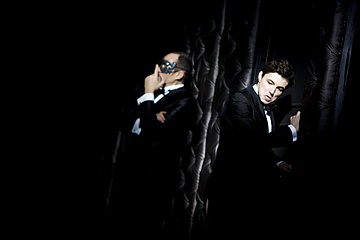
              In Paris it is the carnival, a time of masks and costumes. For Violetta, however, it is not the same city. Paris has become terrifying. It has turned into an arena where Violetta will commit a kind of public suicide. Gypsies who foretell love, to her are a sign of the inevitability of her destiny. Matadors are sophisticated, perverse killers. Violetta interrupts her performance. Just then, Alfredo appears; he is playing cards for high stakes, for Violetta in a sense, hoping to return to the country together, to repay his unwanted debt of a kept man. But Violetta, true to her word, discourages her beloved, lying that she wants to remain faithful to Douphol. Determined and jealous, Alfredo disgraces Violetta in public by tossing her the money she has spent on him. His violent gesture makes an impression even on this blasé society.

            • Act IV

              Emptiness, loneliness. Nothing is left for the abandoned and feverish Violetta but to die. She hears the doctor's sentence – just a few more hours of life left. The words from Germont's letter, in which he begs her forgiveness and announces his and Alfredo's arrival, keep going through her mind like a mantra. A curt 'too late' testifies to Violetta's fever-sharpened awareness. The dream is over, but her final moments resemble a film about happy love, in which Violetta would want to live, Alfredo would do anything to make up for past wrongs, and Germont would do anything for forgiveness. But it is all too late. Violetta dies.

            Sponsors

            • - Ministerstwo Kultury i Dziedzictwa Narodowego
            • Partnerzy Akademii Operowej

            • - PZU
            • Partnerzy Teatru Wielkiego - Opery Narodowej

            • Partner technologiczny

            • Paged Meble
            • Patroni medialni

            • - Polskie Radio Program 2
            • Presto
            • Ministry of Culture and National Heritage of the Republic of Poland
            • Partners of the Opera Academy

            • - PZU
            • Partners of Teatr Wielki – Polish National Opera

            • Technological partner

            • Paged
            • Media patrons

            • - Polskie Radio Program 2
            • Presto
            • Strona główna
            • Udostępnij
            do góry
            • What's on

              • The 2026/27 Season
              • Calendar of Events

              Tickets

              • Buy a ticket
              • 2025/26 Terms & Conditions
              • 2026/27 Terms & Conditions
            • About

              • News
              • Polish National Ballet
              • The People
              • The Place
              • History
              • Backstage
              • VOD
              • For the media
              • Contact us
            • Our projects

              • Education
              • Opera Academy
              • Moniuszko Competition
            • Practical info

              • Your visit
              • Accessibility
              • Sitemap
              • Newsletter
            • For partners and sponsors

              • Our partners and sponsors
              • Venue hire
              • Public procurement
              • Job offers
            Logo Instagram

            Teatr Wielki - Polish National Opera, plac Teatralny 1, 00-950 Warszawa, skrytka pocztowa 59

            Reservations: +48 22 692 02 08 Operator: +48 22 692 02 00 E-mail: office@teatrwielki.pl

            ''