
György Ligeti was born in 1923 in Transylvania, in present-day Romania. He completed a primary school and middle school in Kolozsvár (Cluj), and studied music there as well. In 1941 he enrolled in the local conservatoire. He also went for cosultations in Budapest. Because if his Jewish origins he was not admitted to university to study mathematics and physics. In 1943 he was put in a labour camp. His brother Gabor died in Mauthausen and his father in Auschwitz. Of his closest relatives, his mother managed to survive the war.
After 1945 György Ligeti took up his studies again, this time chosing the Academy of Music in Budapest. He then worked as lecturer at his alma mater util 1956, teaching harmony, counterpoint, and musical forms. At first a believer in the socialist ideals, he wrote a series of folk works. At the same time he was honing his individual music language, composing for his private use.
After the events of 1956 – the failure of the Hungarian uprising and the Soviet invasion of his homeland – Ligeti decided to flee the country. He crossed the border on foot, reached Vienna, and accepted Austrian citizenship.
The late 1950s were eventful for Ligeti. In 1957-59 he worked at the electronic music studio in Cologne and emerged as composer to a wider audience. With time he was becoming more recognised and popular. For 13 years (1959-1972) he was invited to Darmstadt to run the well-known Summer Course for New Music. From 1961 to 1971 he was guest lecturer in Stockholm, then worked at a range of American colleges. Having suffered from increasingly serious health issues since 2000, he died in 2006.
He had lived in Vienna, Hamburg, and Berlin. When asked about his nationality, he would say: I am a Hungarian Jew from Transylvania with Austrian citizenship. He considered Hungary as his homeland, yet stressed that as an assimilated Jew he is not 100% Hungarian, and having never been christened, he cannot be considered fully assimilated.
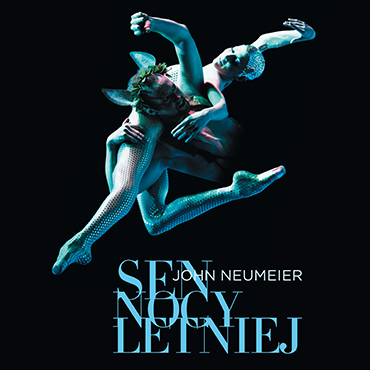
A MIDSUMMER NIGHT'S DREAM
Felix Mendelssohn-Bartholdy, György Ligeti
Ballet in two acts after William Shakespeare | Choreography: John Neumeier | Polish premiere: 15 March 2013