




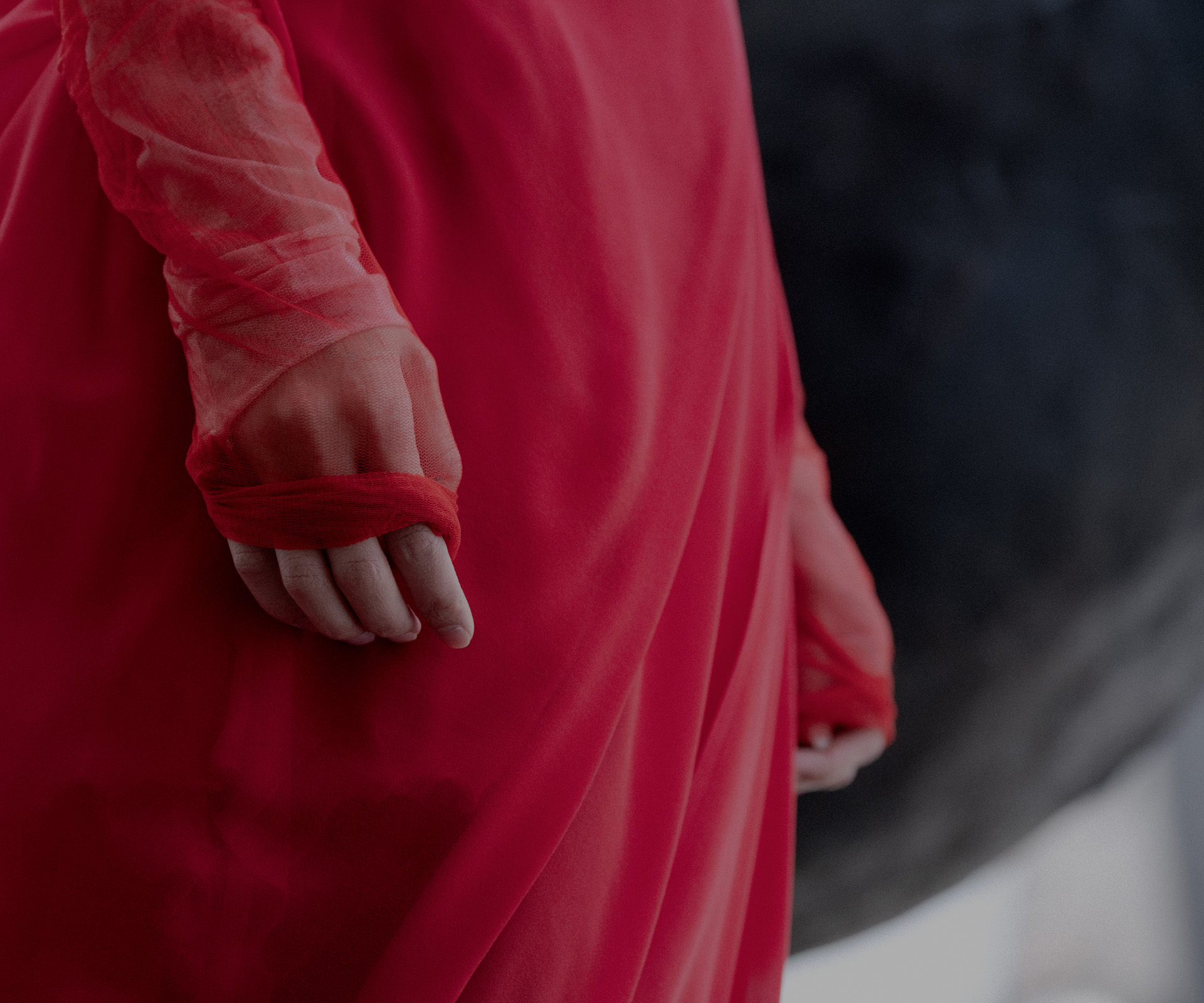
Káťa Kabanová
Leoš Janáček
Opera in seven scenes with prologue
Libretto: Leoš Janáček after Aleksandr Ostrovsky’s play The Storm
World premiere: 23 November 1921, Brno
Premiere of this production: 17 January 2027, Warsaw
In the original Czech with Polish and English surtitles
The story of Káťa Kabanova might seem simple at first glance. A young woman living in an unhappy marriage and suffering abuse from her mother-in-law gets involved in an affair. Hounded by her guilty conscience, she eventually confesses her betrayal to her husband and commits suicide. Although factually accurate, this brief synopsis does not convey the opera's psychological complexity.
Leoš Janáček, one of the most fascinating and singular creators of the turn of the 19th and 20th centuries, achieved his greatest successes in his sixties. Most of his stage works explore unconventional female characters, and so does Káťa Kabanova. The composer was prompted to write the piece by his encounter with Kamila Stösslova. The relationship never developed into an affair, but Stösslová became the composer’s muse. Káťa is one of the woman’s musical portrayals. By a stroke of luck, Janáček came across a Czech translation of Alexander Ostrovsky’s then-popular Russian-language play The Storm. Just before adapting the play into a libretto, he also had a chance to see Puccini’s Madama Butterfly, whose eponymous protagonist reminded Janáček of Stösslová. The combination produced one of the most delicate heroines in 20th-century opera.
Káťa is gentle by nature, extremely fragile, a feature brought out when juxtaposed with her principled and possessive mother-in-law, who plays an equally important role in the opera. The piece's main focus is the younger woman's ill-adjustment. No character is unequivocally good or bad: none gets a chance to spread their wings.
Káťa Kabanova undoubtedly ranks among the most pessimistic works ever written by Janáček. The music’s great lyrical power and intensity derive from the composer's genuine emotion. While fatalistic, the opera radiates sympathy towards the titular character, torn between her principles and desire.
Kornél Mundruczó, a director who works with the same enthusiasm in opera, theatre, and film, sees the opera through a contemporary lens. He approaches it as a local story rooted in the post-communist past of Central and Eastern Europe and a tale about a world that is only superficially open, while, in fact, being governed by strict social norms.
The production is conducted by Yoel Gamzou. Aušrinė Stundytė and Natalia Tanasii star in the lead roles.
Cast
-
-
Dikoj
 Brindley Sherratt
 -
Borys
 Jamez McCorkle
 -
Kabanicha
 Evelyn Herlitzius
 -
Tichon
 Thomas Kinch
 -
Katia
 Natalia Tanasii
 -
Kudriasz
 Benjamin Hullet
-
-
- Warwara
 Ausrine Stundyte
  Nataliia Tepla
 -
-
Dikoj Brindley Sherratt
-
Borys Jamez McCorkle
-
Kabanicha Evelyn Herlitzius
-
Tichon Thomas Kinch
-
Katia Natalia Tanasii
-
Kudriasz Benjamin Hullet
-
-
- Warwara
-
-
Dikoj Brindley Sherratt
-
Borys Jamez McCorkle
-
Kabanicha Evelyn Herlitzius
-
Tichon Thomas Kinch
-
Katia Natalia Tanasii
-
Kudriasz Benjamin Hullet
-
-
- Warwara
-
-
Dikoj Brindley Sherratt
-
Borys Jamez McCorkle
-
Kabanicha Evelyn Herlitzius
-
Tichon Thomas Kinch
-
Katia Natalia Tanasii
-
Kudriasz Benjamin Hullet
-
-
- Warwara
-
-
Dikoj Brindley Sherratt
-
Borys Jamez McCorkle
-
Kabanicha Evelyn Herlitzius
-
Tichon Thomas Kinch
-
Katia Natalia Tanasii
-
Kudriasz Benjamin Hullet
-
-
- Warwara
Credits
-
- Conductor
-
Director
 Kornél Mundruczó
 -
Set and costume designer Vlad Ogay Lyubov Korolkova
-
Lighting Nico de Rooij
 Yoel Gamzou
 -
- Conductor
-
Director Kornél Mundruczó
-
Set and costume designer Vlad Ogay Lyubov Korolkova
-
Lighting Nico de Rooij
-
- Conductor
-
Director Kornél Mundruczó
-
Set and costume designer Vlad Ogay Lyubov Korolkova
-
Lighting Nico de Rooij
-
- Conductor
-
Director Kornél Mundruczó
-
Set and costume designer Vlad Ogay Lyubov Korolkova
-
Lighting Nico de Rooij
-
- Conductor
-
Director Kornél Mundruczó
-
Set and costume designer Vlad Ogay Lyubov Korolkova
-
Lighting Nico de Rooij
Sponsors
-
Ministry of Culture and National Heritage of Poland
-

-
Patrons of the Polish National Opera
Partners of the Opera Academy
-

-

-
Patrons of the Polish National Opera
-

-

-

-
Supporting Partners of the Polish National Opera
-
-

-

-

-

-

-
Technology parner
-

-
Media patrons
-

-

-

-

-

-
Media partner
-

 ''
''