




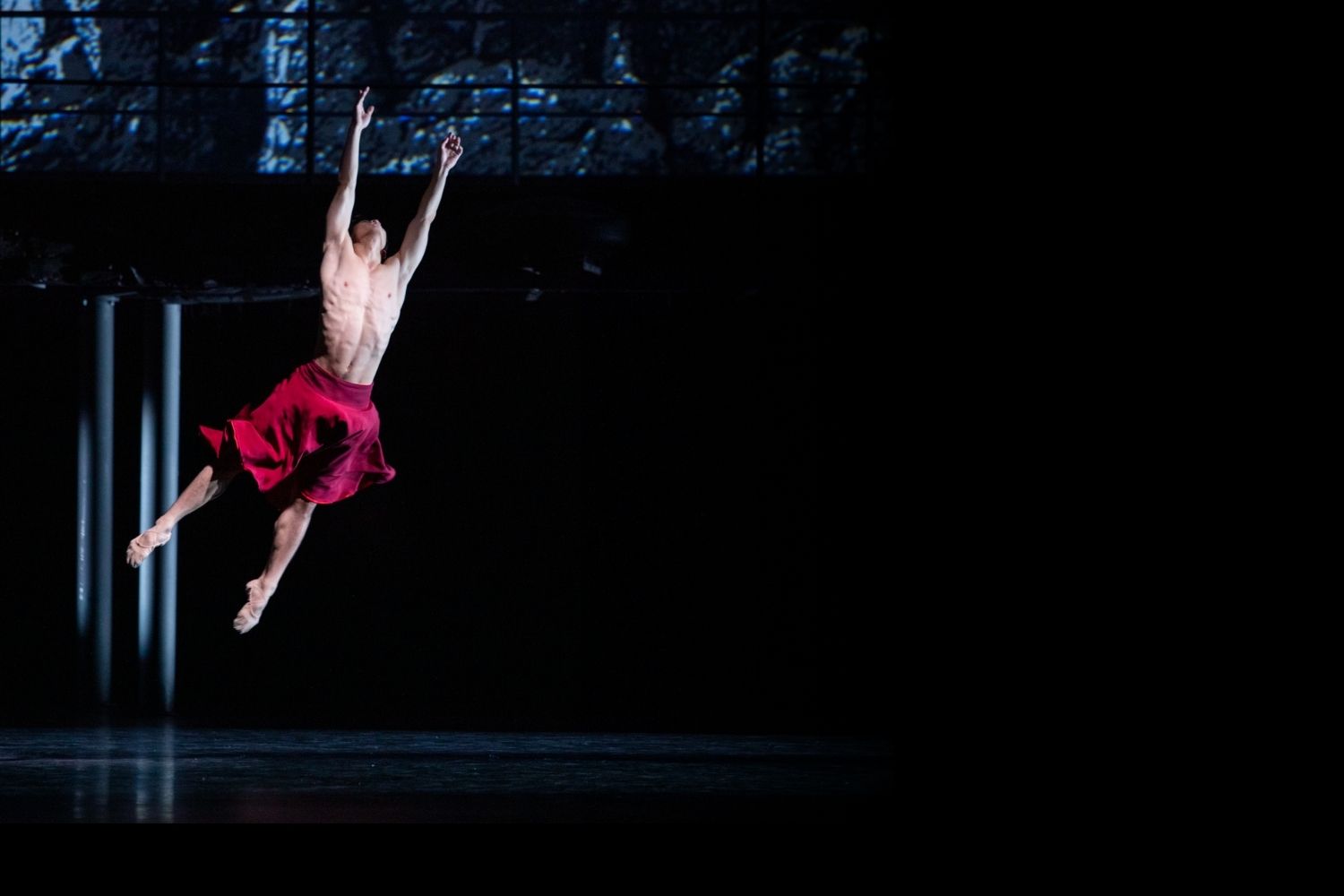
Prometheus
Philip Glass, Wolfgang Amadeus Mozart / Krzysztof Pastor
- See photo: [Translate to English:] Plakat: Adam Żebrowski, zdjęcie: Łukasz Murgrabia, na zdjęciu: Ryota Kitai
![[Translate to English:] Plakat: Adam Żebrowski, zdjęcie: Łukasz Murgrabia, na zdjęciu: Ryota Kitai](/fileadmin/_processed_/8/3/csm_Prometeusz_B1_Prevka_a27ca372dd.jpg "[Translate to English:] Plakat: Adam Żebrowski, zdjęcie: Łukasz Murgrabia, na zdjęciu: Ryota Kitai")
- See photo: [Translate to English:] Polski Balet Narodowy (scena zespolowa), fot. Ewa Krasucka
![[Translate to English:] Polski Balet Narodowy (scena zespolowa), fot. Ewa Krasucka](/fileadmin/import/media/img/SPEKTAKLE_KONCERTY/Prometeusz/1._Prometeusz_Polski_Balet_Narodowy__scena_zespolowa___fot._Ewa_Krasucka__EKR_7820.jpg "[Translate to English:] Polski Balet Narodowy (scena zespolowa), fot. Ewa Krasucka")
- See photo: [Translate to English:] Patryk Walczak (Prometeusz) i Vladimir Yaroshenko (Zeus), fot,. Ewa Krasucka
![[Translate to English:] Patryk Walczak (Prometeusz) i Vladimir Yaroshenko (Zeus), fot,. Ewa Krasucka](/fileadmin/import/media/img/SPEKTAKLE_KONCERTY/Prometeusz/2._Patryk_Walczak__Prometeusz__i_Vladimir_Yaroshenko__Zeus___fot_._Ewa_Krasucka_EKR_6706.jpg "[Translate to English:] Patryk Walczak (Prometeusz) i Vladimir Yaroshenko (Zeus), fot,. Ewa Krasucka")
- See photo: [Translate to English:] Chinara Alizade (Pandora), fot. Ewa Krasucka
![[Translate to English:] Chinara Alizade (Pandora), fot. Ewa Krasucka](/fileadmin/import/media/img/SPEKTAKLE_KONCERTY/Prometeusz/3._Chinara_Alizade__Pandora___fot._Ewa_Krasucka__EKR_6190.jpg "[Translate to English:] Chinara Alizade (Pandora), fot. Ewa Krasucka")
- See photo: [Translate to English:] Kristóf Szabó (Orzeł), fot. Ewa Krasucka
![[Translate to English:] Kristóf Szabó (Orzeł), fot. Ewa Krasucka](/fileadmin/import/media/img/SPEKTAKLE_KONCERTY/Prometeusz/4._Kristof_Szabo__Orzel___fot._Ewa_Krasucka__EKR_6593.jpg "[Translate to English:] Kristóf Szabó (Orzeł), fot. Ewa Krasucka")
![[Translate to English:] Plakat: Adam Żebrowski, zdjęcie: Łukasz Murgrabia, na zdjęciu: Ryota Kitai](/fileadmin/import/media/img/SPEKTAKLE_KONCERTY/Prometeusz/Prometeusz_B1_Prevka.jpg "[Translate to English:] Plakat: Adam Żebrowski, zdjęcie: Łukasz Murgrabia, na zdjęciu: Ryota Kitai")
![[Translate to English:]](/fileadmin/_processed_/9/8/csm_PROMETEUSZ_-_teaser_ade7d12350.png "[Translate to English:]")
Ballet in two acts
Music: Philip Glass (Symphony No. 11 and Mad Rush), Wolfgang Amadeus Mozart (Requiem in D minor)
World Premiere: 18 June 2025, Polish National Ballet, Warsaw
We all know the story of Prometheus, who stole fire from the gods to share it with mortals, thus contributing to humanity’s development. The myth has endured for centuries and taken on increasing cultural significance. The eponymous Titan has become the embodiment of resistance against tyranny and the symbol of heroic fight for freedom. His story has ignited the imagination of poets, writers, painters, and sculptors for centuries. Krzysztof Pastor does not try to conceal his fascination with its symbolism, yet he also examines the ramifications of Prometheus’s act. By stealing fire from the gods, the Titan spurred humankind’s civilisational progress, yet the advancement came at the cost of the world’s gradual degeneration. Let us not forget, however, that alongside the suffering following Prometheus’s act and the opening of Pandora’s Box came Hope. And there is still room for it in today’s world. This ballet offers another original interpretation of the Promethean myth.
IN THE WORDS OF THE CHOREOGRAPHER
MY PROMETHEUS
My ballet is, on one hand, the story of Prometheus, the titan who stole fire from the gods, enabling humanity not only to warm itself and secure food but also to make enormous strides in civilization. In this context, fire symbolizes both power and civilizational progress. However, fire also represents the darker side of our times, embodying the destruction of the natural environment and the relentless, unchecked progress that pushes us toward disaster. This dual symbolism of fire – both as a force of creation and destruction – is reflected in the massive, uncontrollable wildfires that plague our world each year, the tangible consequence of unsustainable development.
On the other hand, the story also explores the theme of punishment. Zeus, the god of gods, decided to punish Prometheus for his defiance by chaining him to a rock and sending an eagle to eat his liver daily. Each night, the liver would regenerate, only for the cycle of torment to begin anew the next day, symbolizing the eternal suffering and sacrifice of an individual for the greater good of society.
Zeus, however, did not stop with Prometheus. He also sought to punish humanity for accepting the stolen fire. To do this, he ordered several lesser gods to create Pandora, a woman of extraordinary beauty and virtue, endowed with intelligence, musicality, and grace. Prometheus's brother, Epimetheus, fell deeply in love with her and decided to marry her. Cunningly, Zeus presented Pandora with a mysterious wedding gift for Epimetheus – a box, "Pandora's Box", with the strict instruction that it should never be opened. Yet, Pandora, unable to resist her overwhelming curiosity, opened the box, unleashing all the evils that would plague humanity forever: diseases, wars, hatred, plagues, pandemics, floods, torrential rains, and violent fires. Horrified by what she had done, Pandora quickly shut the box, trapping a small spark of hope at the very bottom – a hope that we carry with us, the belief that not everything is lost. This hope, fragile yet enduring, holds the power to either deceive us or save us all.
This is the essence of my Prometheus. Of course, the ballet will convey these themes in a more symbolic and metaphorical manner, using the abstract language of dance to explore these ideas poetically rather than literally.
Krzysztof Pastor
Credits
-
- Choreography
- Conductor
- Set and costume designer
-
Dramaturgy
 Klaus Bertisch
 - Lighting
- Video Projections
-
- Chorus Master
- Assistant choreographer
 Krzysztof Pastor
  Yoel Gamzou
  Tatyana van Walsum
  Jean Kalman
  Bartek Macias
  Łukasz Hermanowicz
  Simonetta Lysy
 -
- Choreography
- Conductor
- Set and costume designer
-
Dramaturgy Klaus Bertisch
- Lighting
- Video Projections
-
- Chorus Master
- Assistant choreographer
-
- Choreography
- Conductor
- Set and costume designer
-
Dramaturgy Klaus Bertisch
- Lighting
- Video Projections
-
- Chorus Master
- Assistant choreographer
-
- Choreography
- Conductor
- Set and costume designer
-
Dramaturgy Klaus Bertisch
- Lighting
- Video Projections
-
- Chorus Master
- Assistant choreographer
-
- Choreography
- Conductor
- Set and costume designer
-
Dramaturgy Klaus Bertisch
- Lighting
- Video Projections
-
- Chorus Master
- Assistant choreographer
-
- Choreography
- Conductor
- Set and costume designer
-
Dramaturgy Klaus Bertisch
- Lighting
- Video Projections
-
- Chorus Master
- Assistant choreographer
-
- Choreography
- Conductor
- Set and costume designer
-
Dramaturgy Klaus Bertisch
- Lighting
- Video Projections
-
- Chorus Master
- Assistant choreographer

Sponsors
-
Ministry of Culture and National Heritage of Poland
-

-
Patrons of the Polish National Opera
Partners of the Opera Academy
-

-

-
Patrons of the Polish National Opera
-

-

-

-
Supporting Partners of the Polish National Opera
-

-

-

-

-

-

-
Technology parner
-

-
Media patrons
-

-

-

-

-

-
Media partner
-

 ''
''