




Rigoletto
Giuseppe Verdi
- See photo: [Translate to English:] Rigoletto fot. / photo Krzysztof Bieliński
![[Translate to English:] Rigoletto fot. / photo Krzysztof Bieliński](/fileadmin/_processed_/0/b/csm_BIEL5384_1920x1280_12181ddc11.jpg "[Translate to English:] Rigoletto fot. / photo Krzysztof Bieliński")
- See photo: [Translate to English:] Rigoletto fot. / photo Krzysztof Bieliński
![[Translate to English:] Rigoletto fot. / photo Krzysztof Bieliński](/fileadmin/_processed_/c/9/csm_BIEL5418_1920x1280_94fe2823ea.jpg "[Translate to English:] Rigoletto fot. / photo Krzysztof Bieliński")
- See photo: [Translate to English:] Rigoletto fot. / photo Krzysztof Bieliński
![[Translate to English:] Rigoletto fot. / photo Krzysztof Bieliński](/fileadmin/_processed_/4/7/csm_BIEL5437_1920x1280_0a6ec60f56.jpg "[Translate to English:] Rigoletto fot. / photo Krzysztof Bieliński")
- See photo: [Translate to English:] Rigoletto fot. / photo Krzysztof Bieliński
![[Translate to English:] Rigoletto fot. / photo Krzysztof Bieliński](/fileadmin/_processed_/8/c/csm_BIEL5454_1920x1280_bbfafdfd44.jpg "[Translate to English:] Rigoletto fot. / photo Krzysztof Bieliński")
- See photo: [Translate to English:] Rigoletto fot. / photo Krzysztof Bieliński
![[Translate to English:] Rigoletto fot. / photo Krzysztof Bieliński](/fileadmin/_processed_/e/d/csm_BIEL5455_1920x1280_ef516c8b44.jpg "[Translate to English:] Rigoletto fot. / photo Krzysztof Bieliński")
- See photo: [Translate to English:] Rigoletto fot. / photo Krzysztof Bieliński
![[Translate to English:] Rigoletto fot. / photo Krzysztof Bieliński](/fileadmin/_processed_/4/4/csm_BIEL5473_1920x1280_eb5fa387b5.jpg "[Translate to English:] Rigoletto fot. / photo Krzysztof Bieliński")
- See photo: [Translate to English:] Rigoletto fot. / photo Krzysztof Bieliński
![[Translate to English:] Rigoletto fot. / photo Krzysztof Bieliński](/fileadmin/_processed_/4/b/csm_BIEL5691_1920x1280_ef8473f4e0.jpg "[Translate to English:] Rigoletto fot. / photo Krzysztof Bieliński")
- See photo: [Translate to English:] Rigoletto fot. / photo Krzysztof Bieliński
![[Translate to English:] Rigoletto fot. / photo Krzysztof Bieliński](/fileadmin/_processed_/d/3/csm_BIEL5826_1920x1280_6574761501.jpg "[Translate to English:] Rigoletto fot. / photo Krzysztof Bieliński")
- See photo: [Translate to English:] Rigoletto fot. / photo Krzysztof Bieliński
![[Translate to English:] Rigoletto fot. / photo Krzysztof Bieliński](/fileadmin/_processed_/4/1/csm_BIEL5898_1920x1280_831dcc6e34.jpg "[Translate to English:] Rigoletto fot. / photo Krzysztof Bieliński")
- See photo: [Translate to English:] Rigoletto fot. / photo Krzysztof Bieliński
![[Translate to English:] Rigoletto fot. / photo Krzysztof Bieliński](/fileadmin/_processed_/8/6/csm_BIEL5989_1920x1280_ecdb28b95b.jpg "[Translate to English:] Rigoletto fot. / photo Krzysztof Bieliński")
- See photo: [Translate to English:] Rigoletto fot. / photo Krzysztof Bieliński
![[Translate to English:] Rigoletto fot. / photo Krzysztof Bieliński](/fileadmin/_processed_/4/3/csm_BIEL6349_2_1920x1280_f24a2570bc.jpg "[Translate to English:] Rigoletto fot. / photo Krzysztof Bieliński")
![[Translate to English:] Rigoletto fot. / photo Krzysztof Bieliński](/fileadmin/import/media/img/SPEKTAKLE_KONCERTY/Rigoletto/sezon_17_18/BIEL5384_1920x1280.jpg "[Translate to English:] Rigoletto fot. / photo Krzysztof Bieliński")
![[Translate to English:] Rigoletto fot. / photo Krzysztof Bieliński](/fileadmin/import/media/img/SPEKTAKLE_KONCERTY/Rigoletto/sezon_17_18/BIEL5418_1920x1280.jpg "[Translate to English:] Rigoletto fot. / photo Krzysztof Bieliński")
![[Translate to English:] Rigoletto fot. / photo Krzysztof Bieliński](/fileadmin/import/media/img/SPEKTAKLE_KONCERTY/Rigoletto/sezon_17_18/BIEL5437_1920x1280.jpg "[Translate to English:] Rigoletto fot. / photo Krzysztof Bieliński")
![[Translate to English:] Rigoletto fot. / photo Krzysztof Bieliński](/fileadmin/import/media/img/SPEKTAKLE_KONCERTY/Rigoletto/sezon_17_18/BIEL5454_1920x1280.jpg "[Translate to English:] Rigoletto fot. / photo Krzysztof Bieliński")
![[Translate to English:] Rigoletto fot. / photo Krzysztof Bieliński](/fileadmin/import/media/img/SPEKTAKLE_KONCERTY/Rigoletto/sezon_17_18/BIEL5455_1920x1280.jpg "[Translate to English:] Rigoletto fot. / photo Krzysztof Bieliński")
![[Translate to English:] Rigoletto fot. / photo Krzysztof Bieliński](/fileadmin/import/media/img/SPEKTAKLE_KONCERTY/Rigoletto/sezon_17_18/BIEL5473_1920x1280.jpg "[Translate to English:] Rigoletto fot. / photo Krzysztof Bieliński")
![[Translate to English:] Rigoletto fot. / photo Krzysztof Bieliński](/fileadmin/import/media/img/SPEKTAKLE_KONCERTY/Rigoletto/sezon_17_18/BIEL5691_1920x1280.jpg "[Translate to English:] Rigoletto fot. / photo Krzysztof Bieliński")
![[Translate to English:] Rigoletto fot. / photo Krzysztof Bieliński](/fileadmin/import/media/img/SPEKTAKLE_KONCERTY/Rigoletto/sezon_17_18/BIEL5826_1920x1280.jpg "[Translate to English:] Rigoletto fot. / photo Krzysztof Bieliński")
![[Translate to English:] Rigoletto fot. / photo Krzysztof Bieliński](/fileadmin/import/media/img/SPEKTAKLE_KONCERTY/Rigoletto/sezon_17_18/BIEL5898_1920x1280.jpg "[Translate to English:] Rigoletto fot. / photo Krzysztof Bieliński")
![[Translate to English:] Rigoletto fot. / photo Krzysztof Bieliński](/fileadmin/import/media/img/SPEKTAKLE_KONCERTY/Rigoletto/sezon_17_18/BIEL5989_1920x1280.jpg "[Translate to English:] Rigoletto fot. / photo Krzysztof Bieliński")
![[Translate to English:] Rigoletto fot. / photo Krzysztof Bieliński](/fileadmin/import/media/img/SPEKTAKLE_KONCERTY/Rigoletto/sezon_17_18/BIEL6349_2_1920x1280.jpg "[Translate to English:] Rigoletto fot. / photo Krzysztof Bieliński")
![[Translate to English:]](/fileadmin/_processed_/f/9/csm_Rigoletto_-_Teatr_Wielki_-_Opera_Narodowa_-_trailer_385af9ef39.png "[Translate to English:]")
![[Translate to English:]](/fileadmin/_processed_/3/0/csm_Za_kulisami_odc.7__Rigoletto__i_jego_efekty_sceniczne_56360c2e4e.png "[Translate to English:]")
Opera in three acts
Libretto: Francesco Maria after Victor Hugo's play Le roi s'amuse
World premiere: 11 March 1851, Gran Teatro La Fenice, Venice
Polish premiere: 8 November 1853, Teatr Wielki, Warsaw
Premiere of this production: 12 March 1997, Polish National Opera, Teatr Wielki, Warsaw
In the original Italian with Polish surtitles
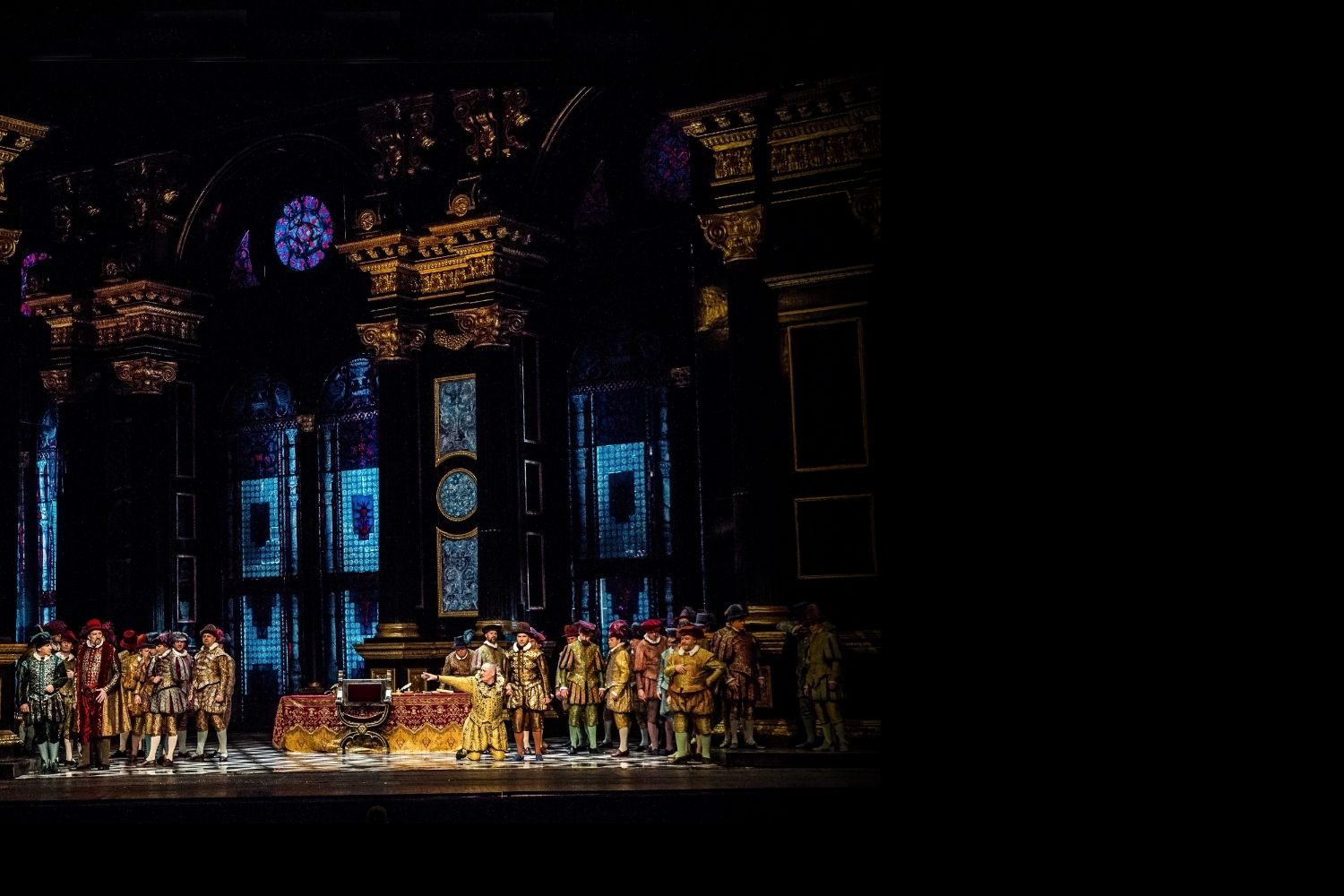
Italy is the world’s leading exporter of beauty in all its forms, including architecture, music, and the creative arts. This production of Rigoletto, directed by Gilberto Deflo and designed by Ezio Frigerio, should be featured on UNESCO’s World Heritage List. The dazzling music conveys a range of emotions, from joie de vivre to passion, despair, and mourning. The production is also a glowing tribute to stagecraft. The Duke of Mantua’s fabulous palace appears onstage only for a quarter of an hour, but its execution is timelessly beautiful. During the interval, the Polish National Opera’s well-coordinated technical crew carefully dismantles the ducal residence’s breathtaking stained glass, so that the audience can immerse themselves in a different mood in the subsequent act with the memory of the palace’s opulence still fresh in their minds. Once the curtain goes up again, the astonished public watches the stage being flooded with pouring rain… Nowadays, it is extremely rare to witness an opera staging that is both faithful to its era and genuinely compelling. This is classic opera at its best.
Cast
-
- Rigoletto
- The Duke
- Gilda
-
Sparafucile
 Li Huanhong
 -
Maddalena Rachael Wilson
- Count Ceprano
-
-
Monterone Roman Chabaranok
- A Page
-
 Artur Ruciński
  Duke Kim
  Aleksandra Olczyk
  Adam Dobek
  Viktoriia Shamanska
 -
- Rigoletto
- The Duke
- Gilda
-
Sparafucile Li Huanhong
-
Maddalena Rachael Wilson
- Count Ceprano
-
-
Monterone Roman Chabaranok
- A Page
-
-
- Rigoletto
- The Duke
- Gilda
-
Sparafucile Li Huanhong
-
Maddalena Rachael Wilson
- Count Ceprano
-
-
Monterone Roman Chabaranok
- A Page
-
-
- Rigoletto
- The Duke
- Gilda
-
Sparafucile Li Huanhong
-
Maddalena Rachael Wilson
- Count Ceprano
-
-
Monterone Roman Chabaranok
- A Page
-
-
- Rigoletto
- The Duke
- Gilda
-
Sparafucile Li Huanhong
-
Maddalena Rachael Wilson
- Count Ceprano
-
-
Monterone Roman Chabaranok
- A Page
-
Credits
-
-
Conductor
 Evan Rogister
 - Director
- Set Designer
- Costumes
- Choreography
- Lighting Designer
-
-
- Chorus Master
 Gilberto Deflo
  Ezio Frigerio
  Franca Squarciapino
  Zofia Rudnicka
  Stanisław Zięba
  Mirosław Janowski
 -
-
Conductor Evan Rogister
- Director
- Set Designer
- Costumes
- Choreography
- Lighting Designer
-
-
- Chorus Master
-
-
Conductor Evan Rogister
- Director
- Set Designer
- Costumes
- Choreography
- Lighting Designer
-
-
- Chorus Master
-
-
Conductor Evan Rogister
- Director
- Set Designer
- Costumes
- Choreography
- Lighting Designer
-
-
- Chorus Master
-
-
Conductor Evan Rogister
- Director
- Set Designer
- Costumes
- Choreography
- Lighting Designer
-
-
- Chorus Master
Synopsis
Sponsors
-
Ministry of Culture and National Heritage of Poland
-

-
Patrons of the Polish National Opera
Partners of the Opera Academy
-

-

-
Patrons of the Polish National Opera
-

-

-

-
Supporting Partners of the Polish National Opera
-

-

-

-

-

-

-
Technology parner
-

-
Media patrons
-

-

-

-

-

-
Media partner
-

 ''
''