




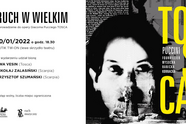
Tosca
Giacomo Puccini
- See photo: [Translate to English:] Proj. graf. Adam Żebrowski
![[Translate to English:] Proj. graf. Adam Żebrowski](/fileadmin/_processed_/1/f/csm_tosca_plakat_60c997de60.jpg "[Translate to English:] Proj. graf. Adam Żebrowski")
- See photo: [Translate to English:] Fot. Krzysztof Bieliński
![[Translate to English:] Fot. Krzysztof Bieliński](/fileadmin/_processed_/1/b/csm_tosca_desktop_BIEL1843_ce96e62b32.jpg "[Translate to English:] Fot. Krzysztof Bieliński")
- See photo: [Translate to English:] Fot. Krzysztof Bieliński
![[Translate to English:] Fot. Krzysztof Bieliński](/fileadmin/_processed_/4/6/csm_tosca_desktop_BIEL1941_8d68b9ac62.jpg "[Translate to English:] Fot. Krzysztof Bieliński")
- See photo: [Translate to English:] Fot. Krzysztof Bieliński
![[Translate to English:] Fot. Krzysztof Bieliński](/fileadmin/_processed_/4/f/csm_tosca_desktop_BIEL2285_565e9369a7.jpg "[Translate to English:] Fot. Krzysztof Bieliński")
- See photo: [Translate to English:] Fot. Krzysztof Bieliński
![[Translate to English:] Fot. Krzysztof Bieliński](/fileadmin/_processed_/8/a/csm_tosca_desktop_BIEL2628_f7d9b7e5cb.jpg "[Translate to English:] Fot. Krzysztof Bieliński")
- See photo: [Translate to English:] Fot. Krzysztof Bieliński
![[Translate to English:] Fot. Krzysztof Bieliński](/fileadmin/_processed_/f/a/csm_tosca_desktop_BIEL2679_cd5d5184b1.jpg "[Translate to English:] Fot. Krzysztof Bieliński")
- See photo: [Translate to English:] Fot. Krzysztof Bieliński
![[Translate to English:] Fot. Krzysztof Bieliński](/fileadmin/_processed_/c/4/csm_tosca_desktop_BIEL2806_f7c43d56d6.jpg "[Translate to English:] Fot. Krzysztof Bieliński")
- See photo: [Translate to English:] Fot. Krzysztof Bieliński
![[Translate to English:] Fot. Krzysztof Bieliński](/fileadmin/_processed_/f/9/csm_tosca_desktop_BIEL2897_9b128920b7.jpg "[Translate to English:] Fot. Krzysztof Bieliński")
- See photo: [Translate to English:] Fot. Krzysztof Bieliński
![[Translate to English:] Fot. Krzysztof Bieliński](/fileadmin/_processed_/d/4/csm_tosca_desktop_BIEL2926_76893ffb11.jpg "[Translate to English:] Fot. Krzysztof Bieliński")
- See photo: [Translate to English:] Fot. Krzysztof Bieliński
![[Translate to English:] Fot. Krzysztof Bieliński](/fileadmin/_processed_/b/f/csm_tosca_desktop_BIEL2993_b7b3c57d66.jpg "[Translate to English:] Fot. Krzysztof Bieliński")
- See photo: [Translate to English:] Fot. Krzysztof Bieliński
![[Translate to English:] Fot. Krzysztof Bieliński](/fileadmin/_processed_/8/5/csm_tosca_desktop_BIEL3299_66bf20f322.jpg "[Translate to English:] Fot. Krzysztof Bieliński")
- See photo: [Translate to English:] Fot. Krzysztof Bieliński
![[Translate to English:] Fot. Krzysztof Bieliński](/fileadmin/_processed_/c/1/csm_tosca_desktop_BIEL3436_66376a5610.jpg "[Translate to English:] Fot. Krzysztof Bieliński")
![[Translate to English:] Proj. graf. Adam Żebrowski](/fileadmin/import/media/img/SPEKTAKLE_KONCERTY/tosca/tosca_plakat.jpg "[Translate to English:] Proj. graf. Adam Żebrowski")
![[Translate to English:] Fot. Krzysztof Bieliński](/fileadmin/import/media/img/SPEKTAKLE_KONCERTY/tosca/tosca_desktop_BIEL1843.jpg "[Translate to English:] Fot. Krzysztof Bieliński")
![[Translate to English:] Fot. Krzysztof Bieliński](/fileadmin/import/media/img/SPEKTAKLE_KONCERTY/tosca/tosca_desktop_BIEL1941.jpg "[Translate to English:] Fot. Krzysztof Bieliński")
![[Translate to English:] Fot. Krzysztof Bieliński](/fileadmin/import/media/img/SPEKTAKLE_KONCERTY/tosca/tosca_desktop_BIEL2285.jpg "[Translate to English:] Fot. Krzysztof Bieliński")
![[Translate to English:] Fot. Krzysztof Bieliński](/fileadmin/import/media/img/SPEKTAKLE_KONCERTY/tosca/tosca_desktop_BIEL2628.jpg "[Translate to English:] Fot. Krzysztof Bieliński")
![[Translate to English:] Fot. Krzysztof Bieliński](/fileadmin/import/media/img/SPEKTAKLE_KONCERTY/tosca/tosca_desktop_BIEL2679.jpg "[Translate to English:] Fot. Krzysztof Bieliński")
![[Translate to English:] Fot. Krzysztof Bieliński](/fileadmin/import/media/img/SPEKTAKLE_KONCERTY/tosca/tosca_desktop_BIEL2806.jpg "[Translate to English:] Fot. Krzysztof Bieliński")
![[Translate to English:] Fot. Krzysztof Bieliński](/fileadmin/import/media/img/SPEKTAKLE_KONCERTY/tosca/tosca_desktop_BIEL2897.jpg "[Translate to English:] Fot. Krzysztof Bieliński")
![[Translate to English:] Fot. Krzysztof Bieliński](/fileadmin/import/media/img/SPEKTAKLE_KONCERTY/tosca/tosca_desktop_BIEL2926.jpg "[Translate to English:] Fot. Krzysztof Bieliński")
![[Translate to English:] Fot. Krzysztof Bieliński](/fileadmin/import/media/img/SPEKTAKLE_KONCERTY/tosca/tosca_desktop_BIEL2993.jpg "[Translate to English:] Fot. Krzysztof Bieliński")
![[Translate to English:] Fot. Krzysztof Bieliński](/fileadmin/import/media/img/SPEKTAKLE_KONCERTY/tosca/tosca_desktop_BIEL3299.jpg "[Translate to English:] Fot. Krzysztof Bieliński")
![[Translate to English:] Fot. Krzysztof Bieliński](/fileadmin/import/media/img/SPEKTAKLE_KONCERTY/tosca/tosca_desktop_BIEL3436.jpg "[Translate to English:] Fot. Krzysztof Bieliński")
[Translate to English:]
Opera in three acts
Libretto: Luigi Illica, Giuseppe Giacosa based on the play by Victorien Sardou
World premiere: 14 January 1900, Rome
Premiere of this production: 23 February 2019, Polish National Opera, Teatr Wielki, Warsaw
In the original Italian with Polish surtitles
Please note that certain seats in the Gallery may have restricted view of the surtitles.
Not unlike Picasso or Klimt, Puccini painted a series of fascinating and multifaceted female portraits. His Manon, Mimi, Tosca, Cio-Cio-San, Magda, and the seemingly frigid Turandot who secretly pines for love, continue to spellbind opera audiences across the world. As time goes by, the characters do not lose any of their distinct flavour, appeal, and relevance, although their stories are set is long-gone realities. Ever since its 1900 premiere at the Teatro Costanzi in Rome, Tosca has sold-out nearly everywhere it was put on. The tragic love story involving blackmail, cruelty, different dimensions of humanity and its lack, crime, and amoral attitudes fascinates audiences that become engulfed by this deadly love tornado.
Puccini had aspired to write an opera to a libretto based on Victorien Sardou’s text since 1889. That was when he first saw Tosca on stage with Sarah Bernhardt in the lead part. He was not a recognised composer back then, which reduced his chances of obtaining the commission. The competition was fierce: Verdi himself was interested in the material. Prominent Italian editor and musician Giulio Ricordi recommended Alberto Franchetti for the task. The young composer did not come to an agreement with librettist Luigi Illika and the job was given to Puccini.
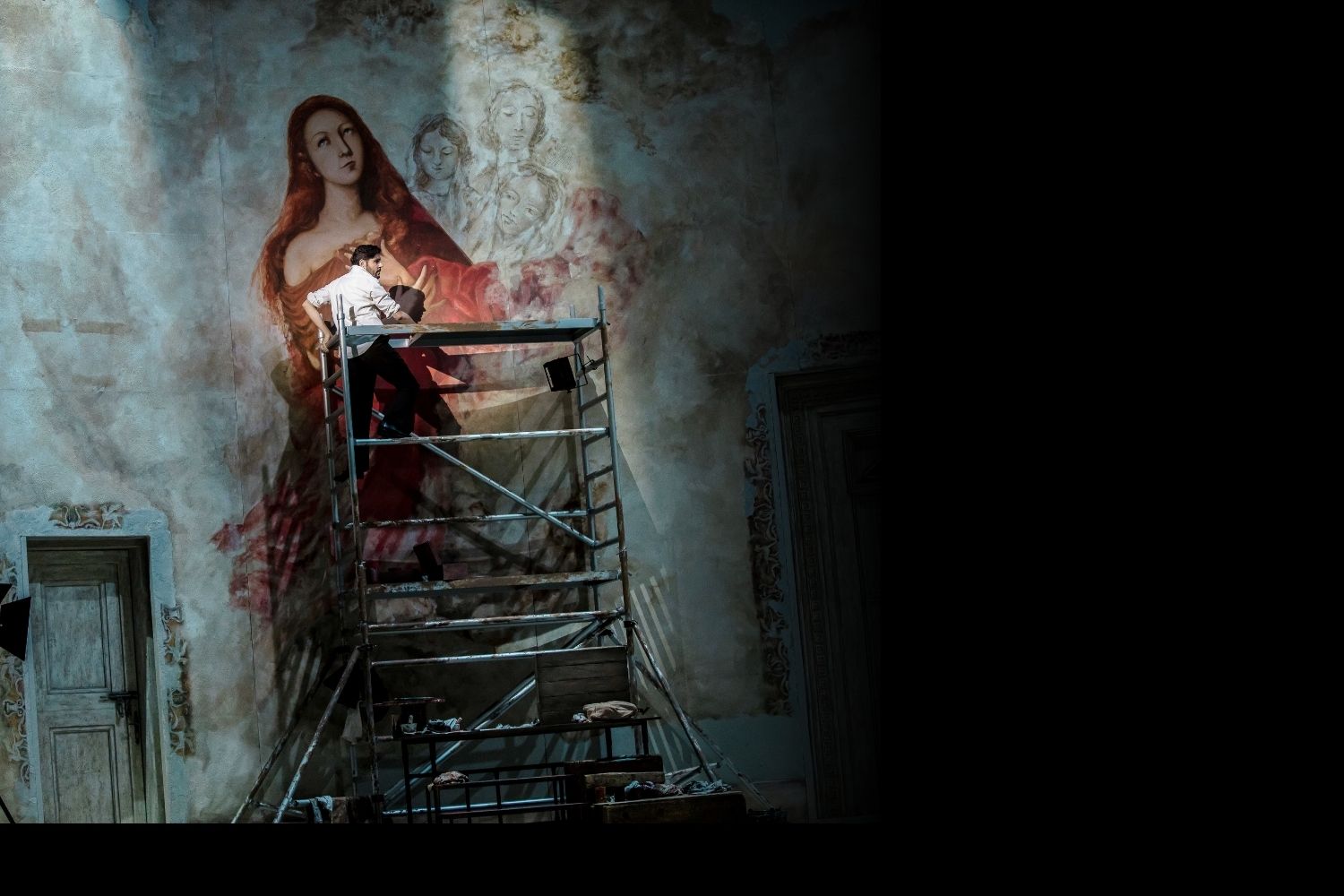
Originally set in Rome at the turn of the 18th and 19th centuries, in Barbara Wysocka's staging the story moves to Italy of the 1970s, a period of violence inflicted by the Red Brigades in response to the neo-fascist activities of the 1960s. The political turmoil, abuses of power, impotence of the state, social rebellion, violence and terror seems to affect the lovers’ tragic fate.
Although the eponymous Tosca is not a femme fatale, her impulsive actions lead to the demise of the man she loves. Faced with a tragic choice, the more the tries to avert calamity, the more imminent it becomes. Driven by the truest love, she unwittingly brings disaster to herself and her beloved. Regardless of her strength of character, courage, and noble intentions, she becomes both the victim and the perpetrator.
The compelling atmosphere is underscored by Puccini’s extraordinary music, full of contradictions, twists and turns that perfectly render the broad array of emotions unfolding on stage: piano and forte, bel canto and scream, whispering and dramatic solo parts, love and death. The contrasts are a proof of the composer’s ability to express both violence and delicacy. The opera also amazes with arresting arias sung by the leads: Floria Tosca’s ‘Vissi d’arte’ and Mario Cavaradossi’s ‘E lucevan le stelle’.
The atmosphere surrounding the premiere of Puccini’s work was tense owing to the developments across Europe and in Rome itself. The cast had received threats in their post and a rumour was going around that someone had planted a bomb at the theatre. The auditorium was in turmoil and panic. The performance was stopped and started anew. Despite the incidents, Tosca proved a success. The audience demanded encores. Today, the piece is among the most frequently staged operas internationally, along with Carmen, The Magic Flute, La bohème, Eugene Onegin, and La traviata. This true masterpiece of the late romantic period returned on the stage of the Polish National Opera in 2019.
Cast
-
- Tosca
-
Cavaradossi
 Marcelo Puente
 - Scarpia
- Angelotti
- Sacristan
- Spoletta
-
- Sciarrone
 Joanna Zawartko
  Szymon Mechliński
  Liam James Karai
  Dariusz Machej
  Roberto Covatta
  Jakub SZMIDT
 -
- Tosca
-
Cavaradossi Marcelo Puente
- Scarpia
- Angelotti
- Sacristan
- Spoletta
-
- Sciarrone
-
- Tosca
-
Cavaradossi Marcelo Puente
- Scarpia
- Angelotti
- Sacristan
- Spoletta
-
- Sciarrone
-
- Tosca
-
Cavaradossi Marcelo Puente
- Scarpia
- Angelotti
- Sacristan
- Spoletta
-
- Sciarrone
Credits
-
- Conductor
- Director
- Set Designer
- Costumes
- Choreography
- Lighting Director
-
- Video Projections
- Make-up
- Chorus Master
- Children's Choir Master
 Yoel Gamzou
 ![[Translate to English:] Barbara Wysocka](/fileadmin/_processed_/d/8/csm_Wysocka-700_607b8de34e.jpg "[Translate to English:] Barbara Wysocka") Barbara Wysocka
Barbara Wysocka ![[Translate to English:] Barbara Hanicka](/fileadmin/_processed_/0/b/csm_Hanicka-700_6f4f44da3d.jpg "[Translate to English:] Barbara Hanicka") Barbara Hanicka
Barbara Hanicka  Julia Kornacka
  Jacek Przybyłowicz
  Marc Heinz
  Lea Mattausch
  Mateusz Stępniak
  Łukasz Hermanowicz
  Danuta Chmurska
 -
- Conductor
- Director
- Set Designer
- Costumes
- Choreography
- Lighting Director
-
- Video Projections
- Make-up
- Chorus Master
- Children's Choir Master
-
- Conductor
- Director
- Set Designer
- Costumes
- Choreography
- Lighting Director
-
- Video Projections
- Make-up
- Chorus Master
- Children's Choir Master
-
- Conductor
- Director
- Set Designer
- Costumes
- Choreography
- Lighting Director
-
- Video Projections
- Make-up
- Chorus Master
- Children's Choir Master
Sponsors
-
Ministry of Culture and National Heritage of Poland
-

-
Patrons of the Polish National Opera
Partners of the Opera Academy
-

-

-
Patrons of the Polish National Opera
-

-

-

-
Supporting Partners of the Polish National Opera
-

-

-

-

-

-

-
Technology parner
-

-
Media patrons
-

-

-

-

-

-
Media partner
-

 ''
''