





Halka
Stanisław Moniuszko
- See photo: [Translate to English:] proj. graf. Adam Żebrowski
![[Translate to English:] proj. graf. Adam Żebrowski](/fileadmin/_processed_/c/b/csm_halka_trelinski_plakat_9a64b2ff4b.jpg "[Translate to English:] proj. graf. Adam Żebrowski")
- See photo: [Translate to English:] Krzysztof Szumański (Stolnik), Maria Stasiak (Zosia), Tomasz Rak (Janusz), fot. Krzysztof Bieliński
![[Translate to English:] Krzysztof Szumański (Stolnik), Maria Stasiak (Zosia), Tomasz Rak (Janusz), fot. Krzysztof Bieliński](/fileadmin/_processed_/a/1/csm_Halka_2022_BIEL0653_f6d26262ae.jpg "[Translate to English:] Krzysztof Szumański (Stolnik), Maria Stasiak (Zosia), Tomasz Rak (Janusz), fot. Krzysztof Bieliński")
- See photo: [Translate to English:] Tomasz Rak (Janusz), fot. Krzysztof Bieliński
![[Translate to English:] Tomasz Rak (Janusz), fot. Krzysztof Bieliński](/fileadmin/_processed_/9/6/csm_Halka_2022_BIEL1483_0247549d8d.jpg "[Translate to English:] Tomasz Rak (Janusz), fot. Krzysztof Bieliński")
- See photo: [Translate to English:] Maria Stasiak (Zosia), fot. Krzysztof Bieliński
![[Translate to English:] Maria Stasiak (Zosia), fot. Krzysztof Bieliński](/fileadmin/_processed_/6/b/csm_Halka_2022_BIEL2048_2cc2a96bf7.jpg "[Translate to English:] Maria Stasiak (Zosia), fot. Krzysztof Bieliński")
![[Translate to English:] proj. graf. Adam Żebrowski](/fileadmin/import/media/img/SPEKTAKLE_KONCERTY/Halka_trelinski/halka_trelinski_plakat.jpg "[Translate to English:] proj. graf. Adam Żebrowski")
![[Translate to English:] Krzysztof Szumański (Stolnik), Maria Stasiak (Zosia), Tomasz Rak (Janusz), fot. Krzysztof Bieliński](/fileadmin/import/media/img/SPEKTAKLE_KONCERTY/Halka_trelinski/2022_www/Halka_2022_BIEL0653.jpg "[Translate to English:] Krzysztof Szumański (Stolnik), Maria Stasiak (Zosia), Tomasz Rak (Janusz), fot. Krzysztof Bieliński")
![[Translate to English:] Tomasz Rak (Janusz), fot. Krzysztof Bieliński](/fileadmin/import/media/img/SPEKTAKLE_KONCERTY/Halka_trelinski/2022_www/Halka_2022_BIEL1483.jpg "[Translate to English:] Tomasz Rak (Janusz), fot. Krzysztof Bieliński")
![[Translate to English:] Maria Stasiak (Zosia), fot. Krzysztof Bieliński](/fileadmin/import/media/img/SPEKTAKLE_KONCERTY/Halka_trelinski/2022_www/Halka_2022_BIEL2048.jpg "[Translate to English:] Maria Stasiak (Zosia), fot. Krzysztof Bieliński")
![[Translate to English:]](/fileadmin/_processed_/5/6/csm_HALKA_-_teaser_4fed33c21c.png "[Translate to English:]")
![[Translate to English:]](/fileadmin/_processed_/8/8/csm_HALKA_-_trailer_7b5f811e14.png "[Translate to English:]")
![[Translate to English:]](/fileadmin/_processed_/6/6/csm_Za_kulisami_odc.2__Halka__i_jej_design_0834c80aa1.png "[Translate to English:]")
Opera in four acts
Libretto: Włodzimierz Wolski
World premiere of the four-act version: 1 January 1858, Teatr Wielki, Warsaw
Premiere of this production: 15 December 2019, Theater an der Wien
A co-production with the Theater an der Wien
In the original Polish with English surtitles
Ever since the premiere of the Warsaw version of Halka in 1858, the opera has been nothing short of an icon. The story of a Highland girl’s star-crossed love for a nobleman’s son is one of the greatest artefacts of Polish (pop) culture. The piece owns its enormous popularity to its skillful mix of dramatic appeal and sensitivity to vital social issues, primarily class stratification and exclusion. The tragic end of the love story is a consequence of misplaced feelings: Halka and Janusz are separated by a deep class divide.
The year 2019, Stanisław Moniuszko’s bicentenary, was a great opportunity to celebrate his work at home and showcase it across Europe. Thanks to the efforts of Piotr Beczała and others, the Polish National Opera and the Theater an der Wien co-produced Mariusz Treliński’s new staging of Halka, which became a highlight of the jubilee celebrations.
The director presents the story from the standpoint of Janusz, whose guilty conscience haunts him years after the tragic events. The shift of perspective adds depth to the character: he is a villain who falls prey to his own wrongdoings. The story of Halka also gains another dimension as we start to wonder how much of it is the product of the hurting ex-lover's imagination.
Halka was written against the backdrop of a bloody peasant uprising known as Galician Slaughter (1846) and zeroes in on the class differences between the title heroine and Janusz. Mariusz Treliński proves that the issue of exclusion is still a relevant topic today. He sets his production in Communist Poland to showcase sharp social divides based not on birth but on occupation. Instead of clashes between the nobility and peasants, the production explores tensions between the local elite and exploited hotel staff. We are transported to a luxurious hotel in the mountain resort of Zakopane, where Janusz is about to marry Zosia, the daughter of a local potentate who terrorises the whole community. For the groom it is a perfect chance to marry into a wealthy family but he is up to no good – he gets involved in an affair with a maid. Halka interprets his interest as a sign of true affection not just a womaniser’s tactics. She spurns the love of Jontek, a waiter of her own social rank who does not, however, offer any prospects for the future. That is how the vicious circle of rejection is formed before leading to the tragic finale.
Treliński’s innovativeness goes beyond modernising of the opera. He weaves a psychologically dense tale that plays out like film noir. What we see is not a kitschy folklore picture that often comes to mind when thinking about the opera, but a gloomy, monochromatic world governed by privilege and injustice despite its righteous slogans of equality. Treliński’s production shows Halka in a new light, allowing us to see the Moniuszko masterpiece as a work with romantic as well as verismo traits.
Cast
-
- Stolnik
- Zofia
- Dziemba
- Janusz
- Jontek
- Halka
-
- Tenor
- A piper
 Krzysztof Szumański
  Maria Stasiak
  Dariusz Machej
 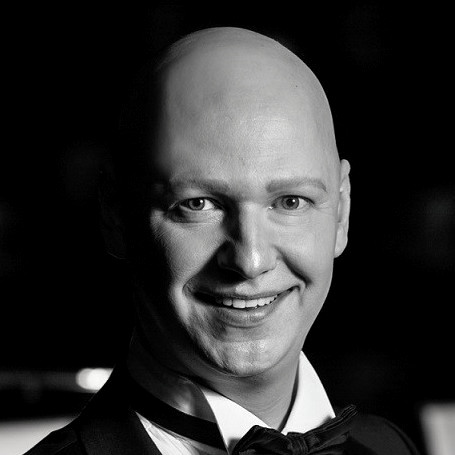 Tomasz Rak
 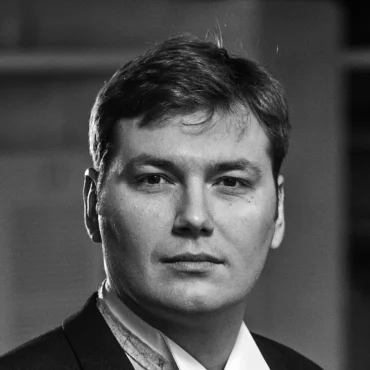 Rafał Bartmiński
  Izabela Matuła
  Zbigniew Malak
  Bartosz Kieszkowski
 -
- Stolnik
- Zofia
- Dziemba
- Janusz
- Jontek
- Halka
-
- Tenor
- A piper
-
- Stolnik
- Zofia
- Dziemba
- Janusz
- Jontek
- Halka
-
- Tenor
- A piper
Credits
-
- Director
- Set Designer
- Costumes
- Lighting Designer
- Choreography
- Dramaturgy
-
- Video Projections
- Chorus Master
-
Hair and make-up
 Łukasz Pycior
 - Casting Director
- Conductor
 Mariusz Treliński
  Boris Kudlička
  Dorota Roqueplo
  Marc Heinz
  Tomasz Jan Wygoda
  Piotr Gruszczyński
  Bartek Macias
  Mirosław Janowski
 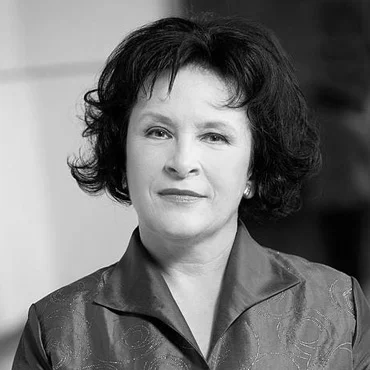 Izabela Kłosińska
  Łukasz Borowicz
 -
- Director
- Set Designer
- Costumes
- Lighting Designer
- Choreography
- Dramaturgy
-
- Video Projections
- Chorus Master
-
Hair and make-up Łukasz Pycior
- Casting Director
- Conductor
-
- Director
- Set Designer
- Costumes
- Lighting Designer
- Choreography
- Dramaturgy
-
- Video Projections
- Chorus Master
-
Hair and make-up Łukasz Pycior
- Casting Director
- Conductor
Chorus and Orchestra of the Polish National Opera
mime artists, dancers
Synopsis
Sponsors
-

-
Patrons of the Polish National Opera | Partners of the Opera Academy
-

-

-
Partners of the Polish National Opera
-

-

-

-
Media patrons
-

-

-

-
Media partner
-
 ''
''