




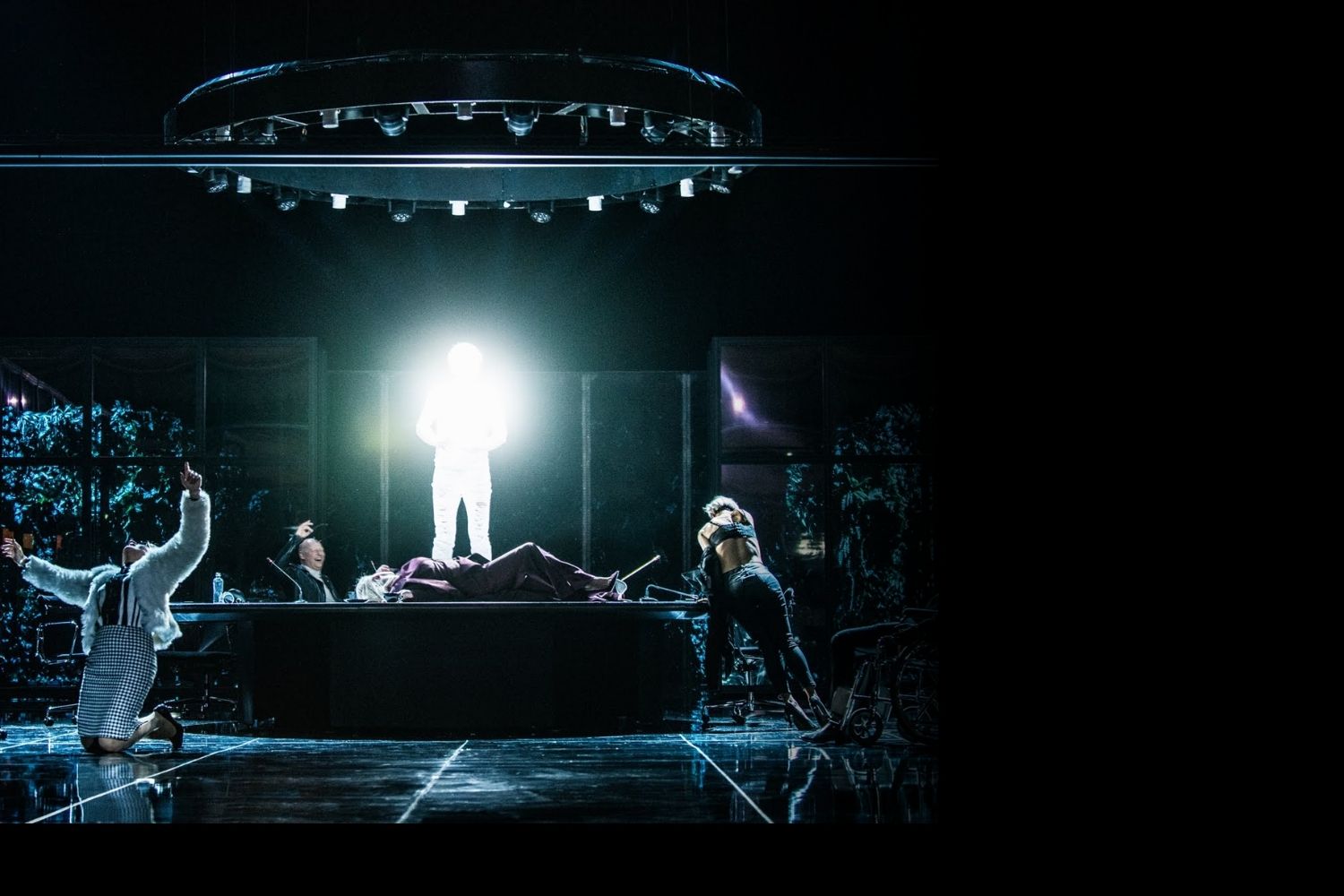
King Roger
Karol Szymanowski
- See photo: [Translate to English:] Koncepcja i projekt graf. Adam Żebrowski / fot. Denis Belyaevskiy
![[Translate to English:] Koncepcja i projekt graf. Adam Żebrowski / fot. Denis Belyaevskiy](/fileadmin/_processed_/7/5/csm_krol_roger_plakat_72758c11c0.jpg "[Translate to English:] Koncepcja i projekt graf. Adam Żebrowski / fot. Denis Belyaevskiy")
- See photo: [Translate to English:] fot. Magda Hueckel
![[Translate to English:] fot. Magda Hueckel](/fileadmin/_processed_/6/c/csm_roger_galeria_www_0231_29019a6eed.jpg "[Translate to English:] fot. Magda Hueckel")
- See photo: [Translate to English:] fot. Magda Hueckel
![[Translate to English:] fot. Magda Hueckel](/fileadmin/_processed_/9/f/csm_roger_galeria_www_0985_1_2976536ba1.jpg "[Translate to English:] fot. Magda Hueckel")
- See photo: [Translate to English:] fot. Magda Hueckel
![[Translate to English:] fot. Magda Hueckel](/fileadmin/_processed_/f/5/csm_roger_galeria_www_1092_1ab5347319.jpg "[Translate to English:] fot. Magda Hueckel")
- See photo: [Translate to English:] fot. Magda Hueckel
![[Translate to English:] fot. Magda Hueckel](/fileadmin/_processed_/c/8/csm_roger_galeria_www_1258_b8a8396897.jpg "[Translate to English:] fot. Magda Hueckel")
- See photo: [Translate to English:] fot. Krzysztof Bieliński
![[Translate to English:] fot. Krzysztof Bieliński](/fileadmin/_processed_/f/f/csm_roger_galeria_www_BIEL2163_4e52c5e417.jpg "[Translate to English:] fot. Krzysztof Bieliński")
- See photo: [Translate to English:] fot. Krzysztof Bieliński
![[Translate to English:] fot. Krzysztof Bieliński](/fileadmin/_processed_/0/3/csm_roger_galeria_www_BIEL2432_fc8353c711.jpg "[Translate to English:] fot. Krzysztof Bieliński")
![[Translate to English:] Koncepcja i projekt graf. Adam Żebrowski / fot. Denis Belyaevskiy](/fileadmin/import/media/img/SPEKTAKLE_KONCERTY/krol_roger/krol_roger_plakat.jpg "[Translate to English:] Koncepcja i projekt graf. Adam Żebrowski / fot. Denis Belyaevskiy")
![[Translate to English:] fot. Magda Hueckel](/fileadmin/import/media/img/SPEKTAKLE_KONCERTY/krol_roger/roger_galeria_www_0231.jpg "[Translate to English:] fot. Magda Hueckel")
![[Translate to English:] fot. Magda Hueckel](/fileadmin/import/media/img/SPEKTAKLE_KONCERTY/krol_roger/roger_galeria_www_0985_1.jpg "[Translate to English:] fot. Magda Hueckel")
![[Translate to English:] fot. Magda Hueckel](/fileadmin/import/media/img/SPEKTAKLE_KONCERTY/krol_roger/roger_galeria_www_1092.jpg "[Translate to English:] fot. Magda Hueckel")
![[Translate to English:] fot. Magda Hueckel](/fileadmin/import/media/img/SPEKTAKLE_KONCERTY/krol_roger/roger_galeria_www_1258.jpg "[Translate to English:] fot. Magda Hueckel")
![[Translate to English:] fot. Krzysztof Bieliński](/fileadmin/import/media/img/SPEKTAKLE_KONCERTY/krol_roger/roger_galeria_www_BIEL2163.jpg "[Translate to English:] fot. Krzysztof Bieliński")
![[Translate to English:] fot. Krzysztof Bieliński](/fileadmin/import/media/img/SPEKTAKLE_KONCERTY/krol_roger/roger_galeria_www_BIEL2432.jpg "[Translate to English:] fot. Krzysztof Bieliński")
Opera in three acts
Libretto: Karol Szymanowski, Jarosław Iwaszkiewicz
World premiere: 19 June 1926, Warsaw
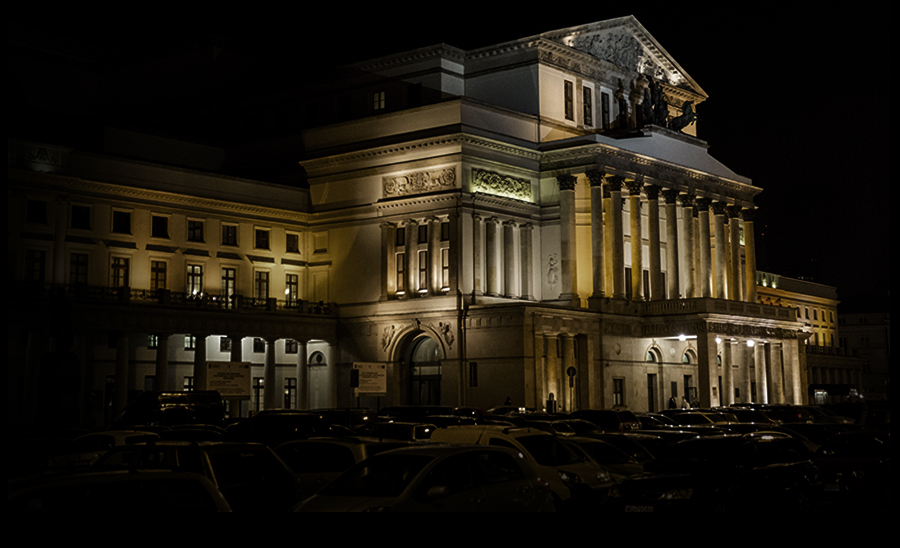
Premiere of this production: 2 December 2018, Polish National Opera, Teatr Wielki, Warsaw
Co-produced with: Royal Swedish Opera; National Theatre, Prague
In the original Polish with English surtitles
Please note the production uses strobes.
For adults only.
Karol Szymanowski’s opera, written to a libretto by Jarosław Iwaszkiewicz, is Poland’s national treasure. ‘King Roger did not see continuation in Polish music; it is also hard to find its precursors in European music; [the opera] remains a wonderful and singular work,’ wrote Józef Kański in his famous Przewodnik operowy [Opera Guide]. The themes of searching for the meaning of life and being confronted by tradition and religion corresponded with Szymanowski’s intellectual, ethical, and philosophical reflections. It also proved particularly inspiring for Mariusz Treliński, who has directed three productions of the opera in the course of is career so far. His interpretations explored ritual themes and paths to self-knowledge. Just ike in a fairy tale where the hero must solve hree riddles, in preparing this production of King Roger, Treliński takes us on a journey hrough the maze of the ‘wonderful and singular work’ and the meanders of his own imagination, now as a mature artist who, nevertheless, does not rest on his laurels.
King Roger is indeed a work of broad intellectual and artistic horizons, a result of Karol Szymanowski’s colourful journeys to the south of Europe and his interest in antique and Arab culture which he read about extensively. The opera brings together the exoticism of the Orient and Dionysian myth, which were so absorbing to the composer also in the context of Nietzsche’s works.
In 1911 Szymanowski went to Sicily together with Stefan Spiess, his well-to-do friend, industrialist, and art lover. They returned to the island three years later, this time also visiting Algiers, Biskra and Tunis. In 1917 35-year-old Karol and his adored cousin, poet and writer Jarosław Iwaszkiewicz came up with the idea to write a ‘Sicilian tragedy’. Szymanowski was attracted to opera, although his first attempt, the one-act Hagith, a Biblical-erotic work written in 1914, was not very successful: the composer did not avoid making beginner mistakes typical for this difficult genre. He did not get discouraged though: ‘Music for the stage is indeed a magical medium,’ he believed.
The first drafts for King Roger at the turn of 1917 and 1918 in Elysavet (present-day Ukraine), a city where Iwaszkiewicz stayed and where the Szymanowski family had moved from Tymoshivka. Seeing the world they knew collapse before their eyes, the two artists sought refuge in magic fiction conjured up by their imagination. Iwaszkiewicz completed the libretto in 1920, following which Szymanowski introduced considerable additions, putting in garlands of worlds. The work was not progressing as he would have wanted: the composer’s mind was somewhere else, in the mountains, pondering Podhale folklore which enchanted him during his first visit to Zakopane in 1921. It was as if the move to Poland where he settled after the Great War having been forced to leave his native Ukrainian steppes and his travels to the South have woken him up from the Oriental dream of his youth.
He finished the ‘goddamn opera’, as he then called it, in the summer of 1924. The most time-consuming part was the instrumentation of the not very long piece. It opened at the Teatr Wielki in Warsaw on 19 June 1926 under Emil Młynarski. The production was directed by Adolf Popławski and designed by Wincenty Drabik. The premiere cast’s Roger was Eugeniusz Mossakowski, Shepherd Adam Dobosz, while the composer’s sister, Stanisława Szymanowska portrayed the queen consort, Roksana.
King Roger concluded a period in Karol Szymanowski’s art that was inspired by ancient history and the Orient and that produced such beautifully sensual works as The Love Songs of Hafiz, Myths for violin and piano, Symphony No. 3 ‘Songs of the Night’, a musical setting of poetry by Persian artist Rumi, or Violin Concerto No. 1. When King Roger was played in Warsaw, the opera’s author had already written Stabat Mater inspired by folk Catholicism and was giving serious thought to Harnasie. Still, years later, he came to the conclusion that King Roger had been the best piece of music he had penned.
In 1949 the opera was staged at Sicily’s Teatro Massimo that overlooks Palermo. Jarosław Iwaszkiewicz, who was in attendance, wrote that the production directed by Bronisław Horowicz, a student of Leon Schiller, was ‘close to perfection’. Iwaszkiewicz’s daughter who watched the show alongside her father noted that real-life Sicily was nowhere close to the mythical one deemed up in Szymanowski’s opera. This is no coincidence: ‘King Roger’s Sicily is a region in the composer’s soul,’ stated Iwaszkiewicz in his book Spotkania z Szymanowskim (Meetings with Szymanowski).
King Roger enjoyed a major international revival in 1998 after Sir Simon Rattle, then the head of the City of Birmingham Symphony Orchestra, conducted it at the BBC Proms and recorded it in full for EMI. Since then the ‘goddamn opera’ has been shown in Paris, London, Madrid and Bilbao, Santa Fe, Frankfurt and Bregenz, Sydney, and Melbourne. Szymanowski would have been pleased.
-
Time is measured by
-
 <iframe width="186" height="186" border="0" src="http://test.horsefield.pl/hf/zegar/" allowfullscreen frameborder="0"></iframe><script> window.onload = function() { scaleClock(); }; window.onresize = function() { scaleClock(); }; scaleClock = function() { parentWidth = $('#arclockDiv').width(); scale = (parentWidth) / $('#arclock').width(); new_width = $('#arclock').width() * scale; $('#arclock').css('transform', ' scale(' + scale + ')'); $('#arclock').css('left', 'calc(186px * ' + (scale - 1) / 2 + ')'); $('#arclock').css('top', 'calc(186px * ' + (scale - 1) / 2 + ')'); } </script>
Cast
-
- Roger
- Roxana
- Edrisi
- Shepherd
- Archbishop
- Deaconess
 Hubert Zapiór
  Gabriela Legun
  Tomasz Rak
  Piotr Buszewski
  Krzysztof Borysiewicz
  Agnieszka Rehlis
 -
- Roger
- Roxana
- Edrisi
- Shepherd
- Archbishop
- Deaconess
-
- Roger
- Roxana
- Edrisi
- Shepherd
- Archbishop
- Deaconess
-
- Roger
- Roxana
- Edrisi
- Shepherd
- Archbishop
- Deaconess
Credits
-
-
Conductor
 Piotr Jaworski
 - Director
- Set Designer
- Costumes
- Lighting Designer
- Video Projections
-
-
- Choreography
- Dramaturgy
- Make-up
- Chorus Master
- Children's Choir Master
 Mariusz Treliński
  Boris Kudlička
  Konrad Parol
  Marc Heinz
  Bartek Macias
  Tomasz Jan Wygoda
  Piotr Gruszczyński
  Waldemar Pokromski
  Łukasz Hermanowicz
  Danuta Chmurska
 -
-
Conductor Piotr Jaworski
- Director
- Set Designer
- Costumes
- Lighting Designer
- Video Projections
-
-
- Choreography
- Dramaturgy
- Make-up
- Chorus Master
- Children's Choir Master
-
-
Conductor Piotr Jaworski
- Director
- Set Designer
- Costumes
- Lighting Designer
- Video Projections
-
-
- Choreography
- Dramaturgy
- Make-up
- Chorus Master
- Children's Choir Master
-
-
Conductor Piotr Jaworski
- Director
- Set Designer
- Costumes
- Lighting Designer
- Video Projections
-
-
- Choreography
- Dramaturgy
- Make-up
- Chorus Master
- Children's Choir Master
Chorus and Orchestra of the Teatr Wielki – Polish National Opera
Dancers, actors, and children of the Artos Children's Choir
Synopsis
Sponsors
-
Sfinansowano ze środków MKiDN w ramach Programu Wieloletniego NIEPODLEGŁA na lata 2017-2022
-
-
Spektakl wyprodukowano we współpracy z Instytutem Adama Mickiewicza w ramach programu Polska Music oraz programu Polska 100, międzynarodowego programu kulturalnego ogłoszonego dla uczczenia Stulecia Odzyskania przez Polskę Niepodległości
-

-

-
Patrons of the Polish National Opera
-

-

-

-
Patrons of the Polish National Opera
Partners of the Opera Academy
-

-

-
Partnerzy Teatru Wielkiego - Opery Narodowej
-
Spektakl w koprodukcji z
-
-
-
Supporting Partners of the Polish National Opera
-
-

-

-

-

-

-
Technology parner
-

-
Media patrons
-

-

-

-

-

-
Media partner
-

 ''
''